Signal Words Tell You the Answer Before You See the Choices
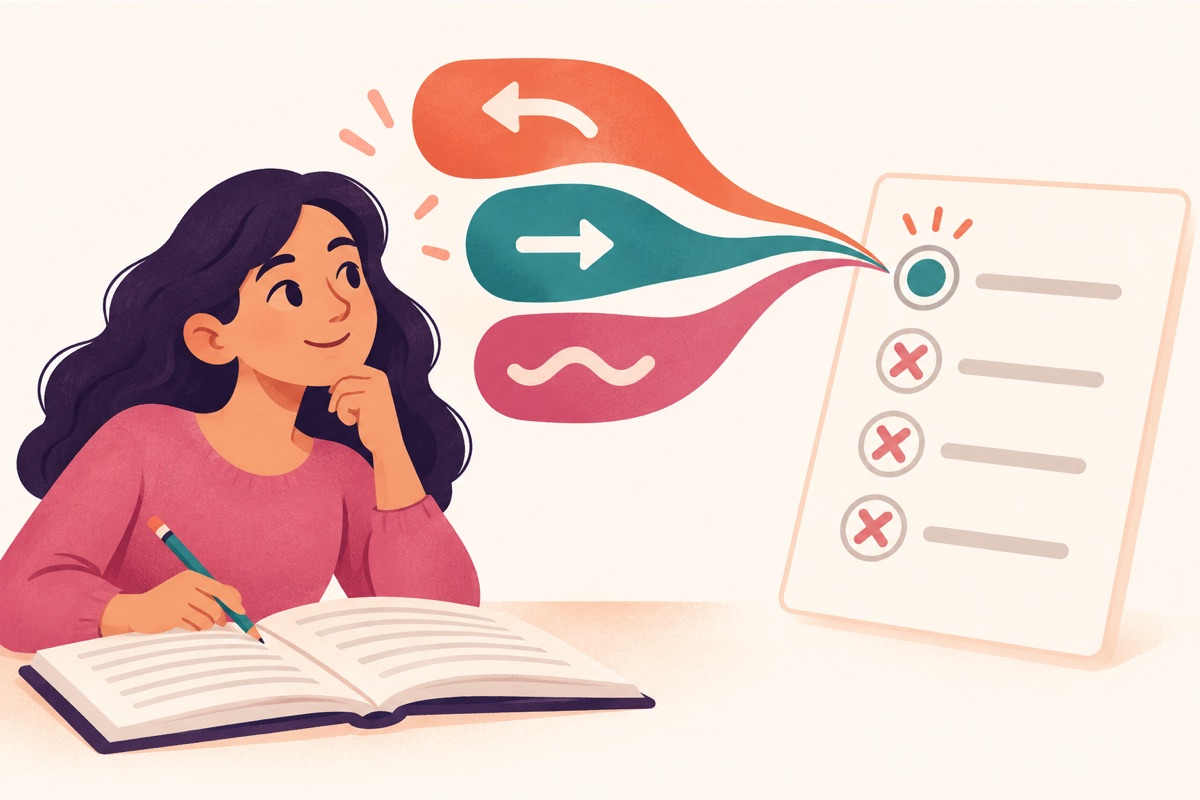
Here is a scene I watch play out every week. A GRE student hits a Text Completion, reads the sentence once, then drops straight to the five answer choices. Every word looks like it MIGHT work. So they plug in choice A and reread the whole sentence. Then B. Then C. Ninety seconds later they pick the one that "sounds best," and it's wrong.
That student didn't have a vocabulary problem. They had a reading problem. The sentence TOLD them the answer, and they never listened, because they skipped right past the smallest words in it.
What these questions actually are
The GRE gives you two scored Verbal sections, each with 20 questions in 30 minutes. Two of the question types are built on a sentence or a short paragraph with holes in it. You can see both on the official Verbal Reasoning page.
- Text Completion: a sentence or short passage with one, two or three blanks. One blank gives you five choices. Two or three blanks give you three choices for each blank. You need EVERY blank right to earn the point.
- Sentence Equivalence: one sentence, one blank, six choices. You pick the TWO choices that each complete the sentence and give it the same meaning. Both must be right to earn the point.
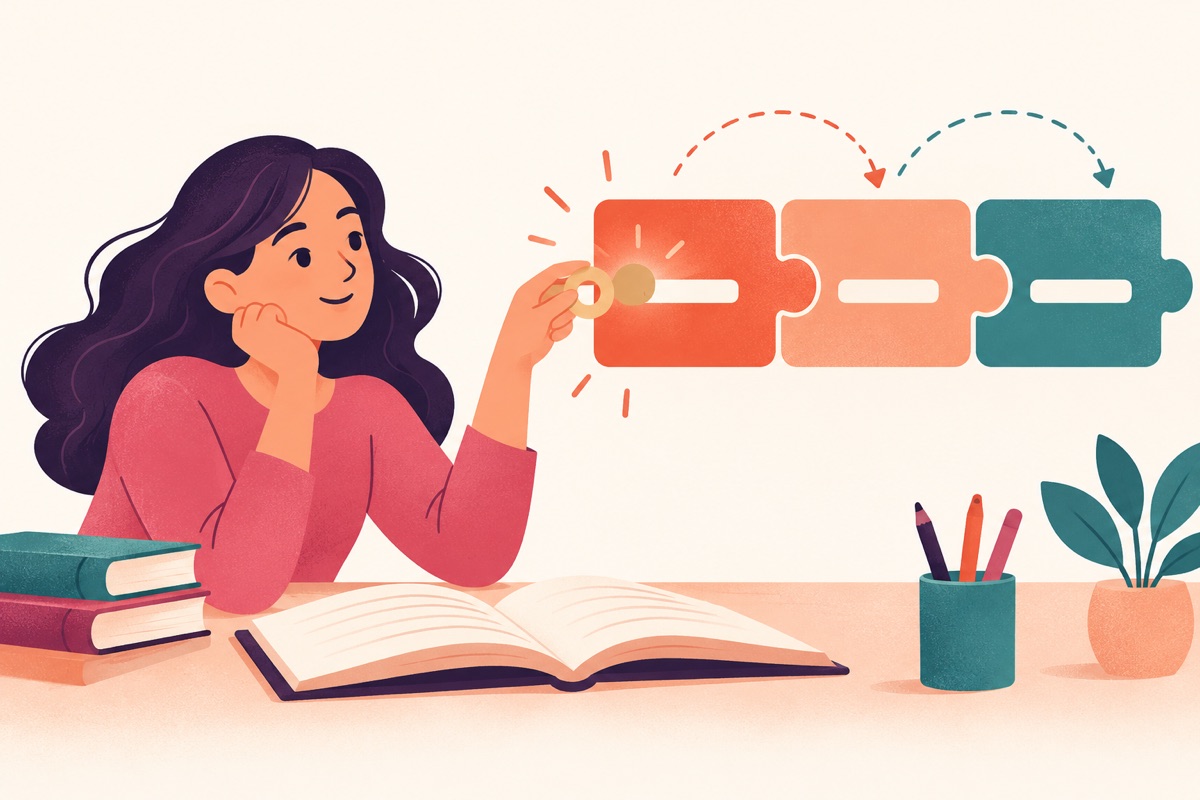
Here is the part most people miss. These sentences are written so that exactly ONE answer works. That means the sentence has to contain something that forces it. That something is almost always two pieces: a clue (a phrase that describes the blank) and a signal word (a little word that tells you how the clue connects to the blank).
Signal words are road signs
A signal word tells you which way the sentence is heading. There are only two directions that matter.
| Same direction (the road goes straight) | Opposite direction (the road turns) |
|---|---|
| because, since, so, thus, therefore | although, though, but, yet |
| and, also, moreover, in addition | despite, in spite of, however |
| in fact, indeed, as a result | while, whereas, unlike, rather than |
| a colon or semicolon that explains | nevertheless, even so, surprisingly |
Try this. "Although she was exhausted, she ______." The word although promises a turn. Whatever fills the blank has to push AGAINST exhausted. She kept working. She finished the race. You know that before you see a single choice.
Now this. "Because she was exhausted, she ______." The road goes straight. She went to bed. She skipped the party.
Same clue. One little word. Opposite answers. Stop and think about that for a second. If you skimmed past although, you would pick the exact WRONG answer, and you would feel confident doing it.
The method, step by step
- Cover the answer choices. Put your hand on the screen if you have to.
- Find the clue: the part of the sentence that describes what goes in the blank.
- Find the signal word and decide: same direction or opposite?
- Write your OWN word for the blank on your scratch paper. A plain word is fine. "Good." "Old." "Not bold."
- Now uncover the choices and cut everything that doesn't match your word.
Step 4 is where people get lazy. Write it DOWN. A prediction in your head drifts the second you see a fancy word you half recognize. A prediction on paper stays put.
The mistakes I see every week
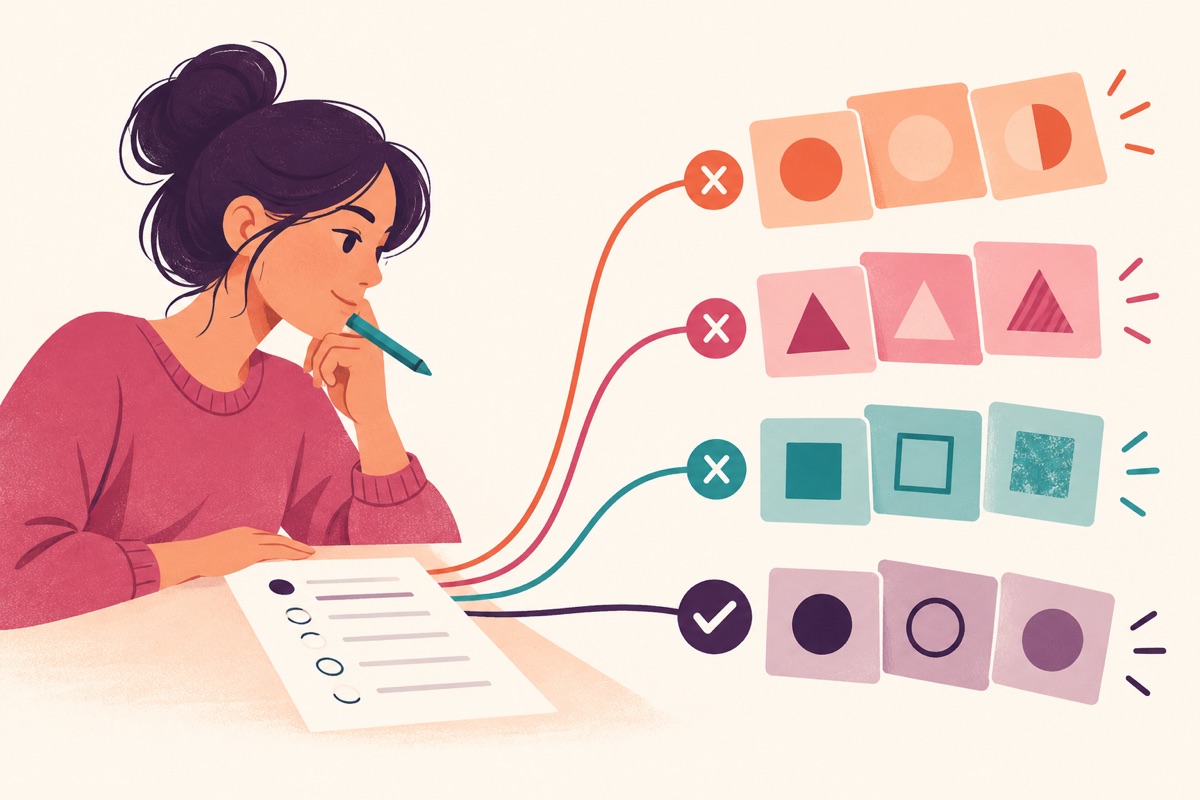
- Reading the choices first. The choices are written to pull you around. Read them first and you're letting the test writer do your thinking. INSTEAD: Cover them, find the clue and the signal, and predict before you look.
- Treating little words as filler. But, yet, despite and since feel too small to matter, so your eyes slide past them. INSTEAD: Every time you see one, write an S (same) or an O (opposite) on your paper. It takes one second.
- Predicting in your head. "I had a word in mind, then I saw choice C and it seemed close enough." INSTEAD: Write the word. Compare the choices to the PAPER, not to your memory.
- Picking the hard word because it's hard. A word you don't fully know is not more likely to be right just because it looks impressive. INSTEAD: Judge the words you DO know first. If three of them clearly fail your prediction, you've cut your way to a much better guess.
- Hunting for synonym pairs first in Sentence Equivalence. This is the big one, and the next example shows why. INSTEAD: Predict first, then find the two choices that match your prediction.
Where else the signals show up
On two and three blank questions, the signal word often sits BETWEEN the blanks and tells you how they relate. Pair that with the habit of starting with the easiest blank, and one solved blank plus one signal word can hand you the other blank for free.
Reading Comprehension is the same game on a bigger field. A however or a while many believe in the middle of a passage is usually where the author stops describing someone else's view and starts giving their own. Miss that turn and the inference questions get a lot harder, because you've got the author arguing the wrong side.
And here's the wager. I'll bet that if you pull up every Text Completion you missed in your last practice set, a big chunk of them have an although, a but or a despite in them that you drove straight past. Go check. Don't take my word for it.
What do you want MORE: to feel fast for the first ten seconds of a question, or to get it right? Writing one letter and one word on your paper is not slow. Plugging in five choices and rereading the sentence five times is slow.
You can also train this off the test. When you read harder stuff every day, notice every turn word and ask yourself which way the writer just went. After a few weeks, your eyes stop sliding past them.
Your challenge for today
Pull up 10 Text Completion and Sentence Equivalence questions, either ones you've already done or ones from ETS's free POWERPREP practice. Cover the choices. For each one, write three things on paper: the signal word, an S or an O, and your own word for the blank. THEN uncover. Count how many times your word pointed straight at the answer. For every one where it didn't, go back and find the clue or the little word you missed. Do that today, not after your next practice test.