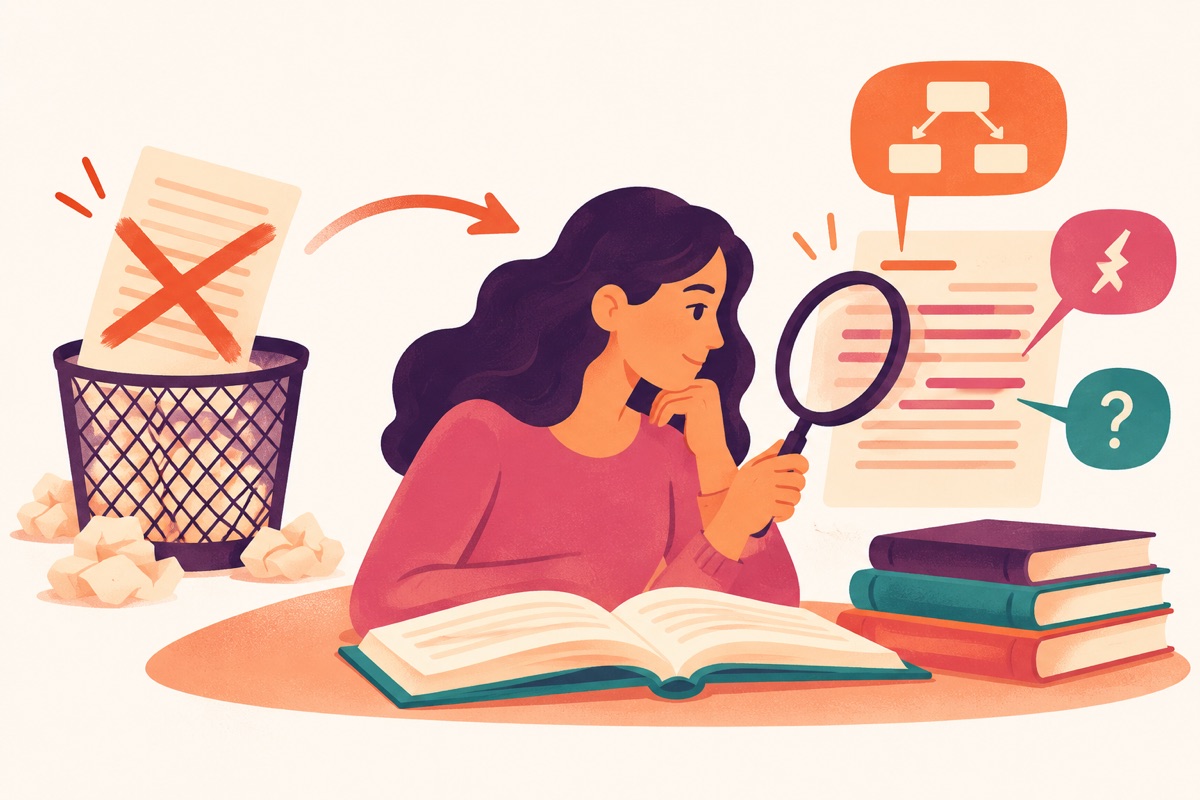
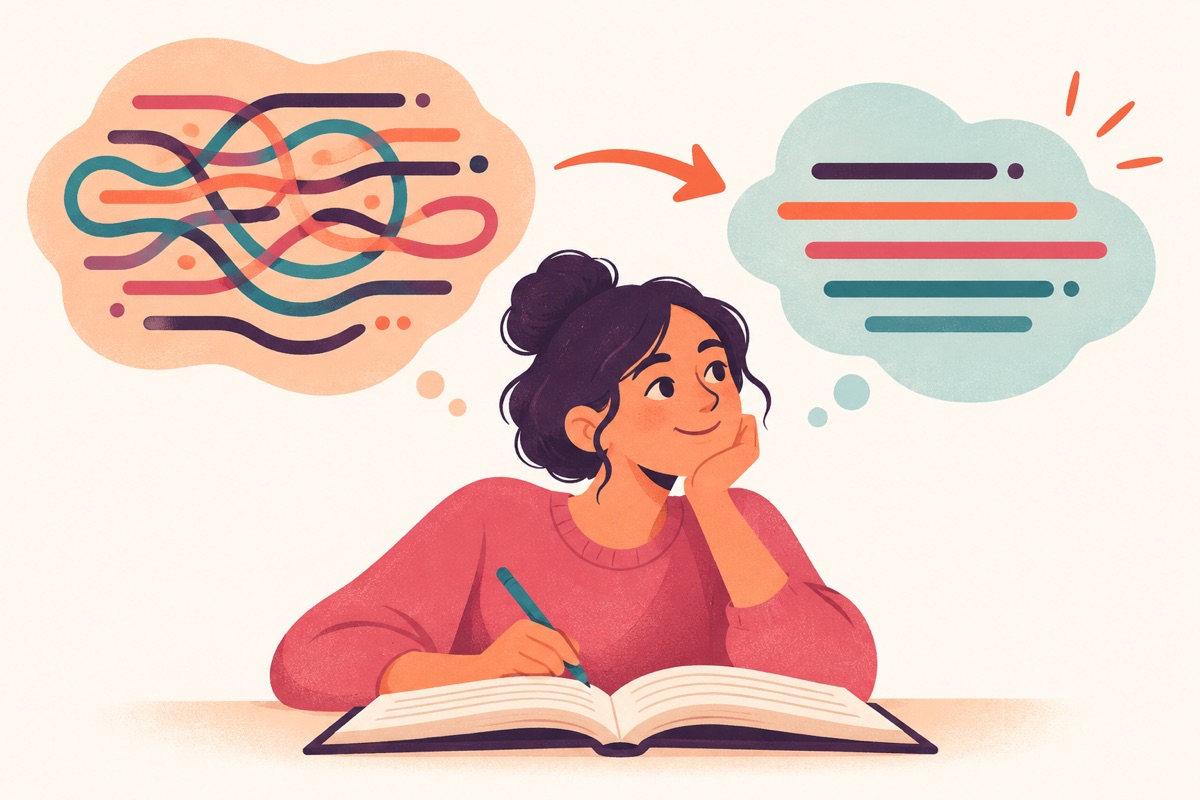
Wrong Answer Choices Follow PATTERNS. Learn Them.
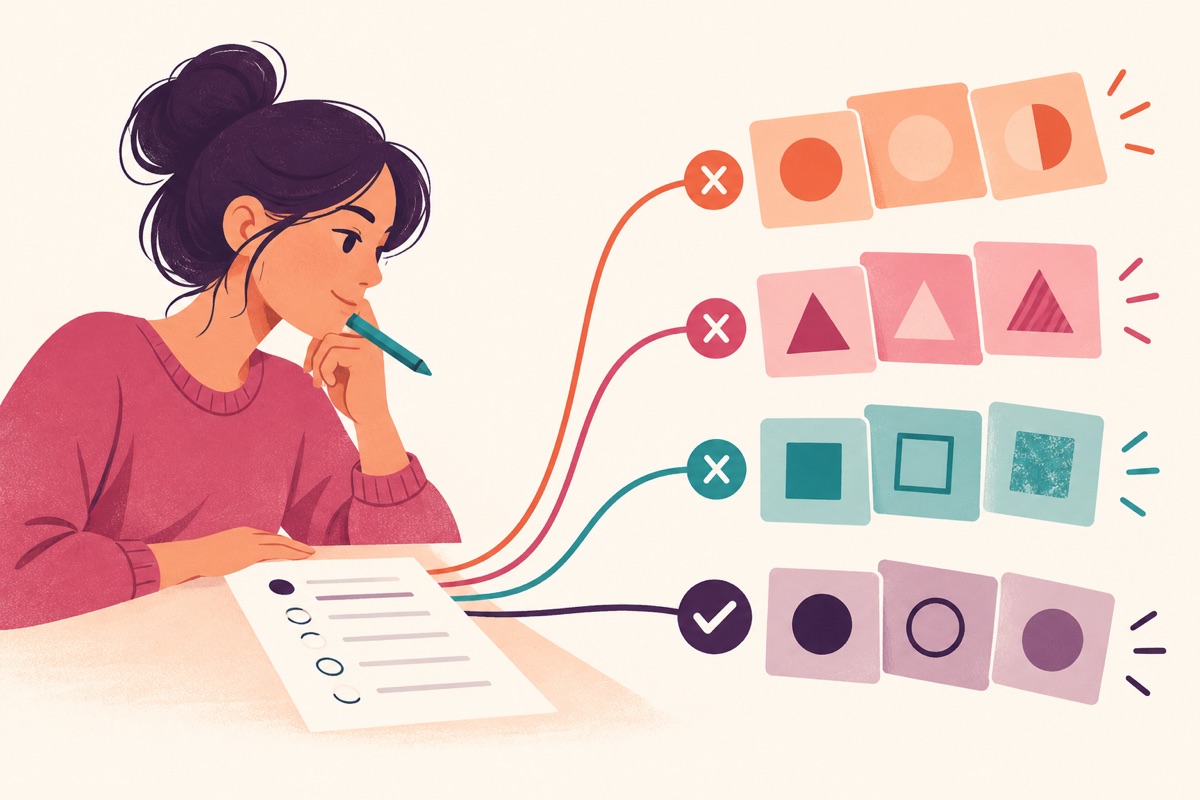
Say you're on question 9 of your first Verbal section. You've cut it down to two choices. You read them both again. Then again. Then you go back to the passage, come back, and read them a fourth time. Ninety seconds are gone, and you pick the one that "feels" better. Wrong.
I watch people do this every single week. They act like the wrong answers are random noise and their job is to stare at the noise until the truth glows. That is NOT how this test works.
GRE wrong answers are built. On purpose. By people who write them for a living, using the same few blueprints over and over. If you know the blueprints, you stop staring and start sorting. A bad choice that used to cost you a minute now costs you five seconds.
Why this matters MORE on the shorter test
The GRE got shorter in September 2023. Today the whole thing runs 1 hour 58 minutes. Verbal comes in two sections: 12 questions in 18 minutes, then 15 questions in 23 minutes. That's about a minute and a half per question. Quant also has two sections: 12 questions in 21 minutes, then 15 in 26 minutes. You can check the breakdown on the official Verbal Reasoning page.
Fewer questions means each one carries more weight. There's no unscored section to hide a bad minute in. If you burn time re-reading two choices, you pay for it on a question you could have gotten right.
The five wrong answers you'll see in Verbal
Stop for a second. Think about the last Reading Comprehension question you missed. (Reading Comprehension means a passage followed by questions about it.) What was wrong with the choice you picked? Don't read on until you have a reason. "It just seemed right" doesn't count.
Now check it against this list. I'll bet it's on here.
- The Extremist. The passage says "some" or "often." The choice says "all," "never," "every," or "no role." One strong word and it's dead.
- The Stranger. It talks about something the passage never touches. It might be true in real life. Doesn't matter. If the passage can't back it, it's out.
- The Flip. It uses the passage's own topic but says the reverse. Rose becomes fell. Helped becomes hurt.
- The Half Truth. The first half matches the passage perfectly. The second half quietly goes wrong. Most people read the first half, nod, and click.
- The Echo. It copies words straight from the passage, but glues them together into a claim the passage never made. Matching words feel safe. That's the trap.
The same blueprints show up in Text Completion too. (A Text Completion is a sentence or short paragraph with one to three blanks, and you pick the word for each blank.) The Flip there is a word that fits the topic but points the wrong way. Clue words like "although" and "because" tell you which way the blank should point; we break those down in Signal Words Tell You the Answer Before You See the Choices.
Quant has patterns too
Quant wrong answers aren't random numbers either. The test writers figure out the mistakes people make, then put the results of those mistakes in the choices. Here are the three I see most.
- The Stop Early. The number you get halfway through the problem. The question asks for the final price; this is the price after step one.
- The Common Slip. The number you get if you make the classic error, like taking a percent of the wrong starting amount.
- The Nice Number Trap. This lives in Quantitative Comparison. (That's the question type where you compare Quantity A and Quantity B and pick which is bigger, or whether you can't tell.) People test only positive whole numbers and miss what happens with 0, negatives or fractions.
More on each type is on the official Quantitative Reasoning page.
Look at that answer list again. Once you know the blueprints, you can almost see the test writer thinking: "Some people will forget the base changed. Some will stop at 120." They're not tricking you with magic. They're betting on your habits. Change the habits and the bet goes your way.
The mistakes I watch people make with wrong answers
- Reading all five choices before you know what you want. You let the choices tell you what the passage said. That's backwards, and it's how Echoes and Half Truths win.
INSTEAD: Predict first, in a few words on paper. Then go hunting for your prediction. - Keeping a choice because it "might" work. "Might" is how you end up stuck between two.
INSTEAD: A choice stays only if the passage PROVES it. If you can't point to the line, it goes. - Doing elimination in your head. Then you forget you already killed (D) and read it again. And again.
INSTEAD: Write A through E on your scratch paper and cross them off. Next to each, jot one letter for the blueprint: X for Extremist, S for Stranger, F for Flip. It takes two seconds and saves you thirty. - Reviewing only the questions you got wrong. You got some right by luck, and you'll never know which.
INSTEAD: On every practice question, right or wrong, name the blueprint behind each wrong choice. If you can't name one, that's the gap you need to train. - Thinking pattern spotting is for "weak" students. That's pride talking. Strong readers miss Half Truths all the time BECAUSE they read fast and trust the first half.
INSTEAD: Treat this like a drill, not a crutch. Pros run the same drill until it's automatic.
Here's your job today
Pull up 10 Verbal questions you've already done. Right or wrong, doesn't matter. For every wrong choice in all 10, write down which blueprint it is: Extremist, Stranger, Flip, Half Truth or Echo. That's 40 wrong answers to name.
If you can name 35 or more without going back to the passage, you're ready to time yourself. If you can't, you just found the reason your Verbal score isn't moving. Either way, you'll know something real tonight that you didn't know this morning. Go do it.