Inference Questions: What MUST Be True, Not What Could Be
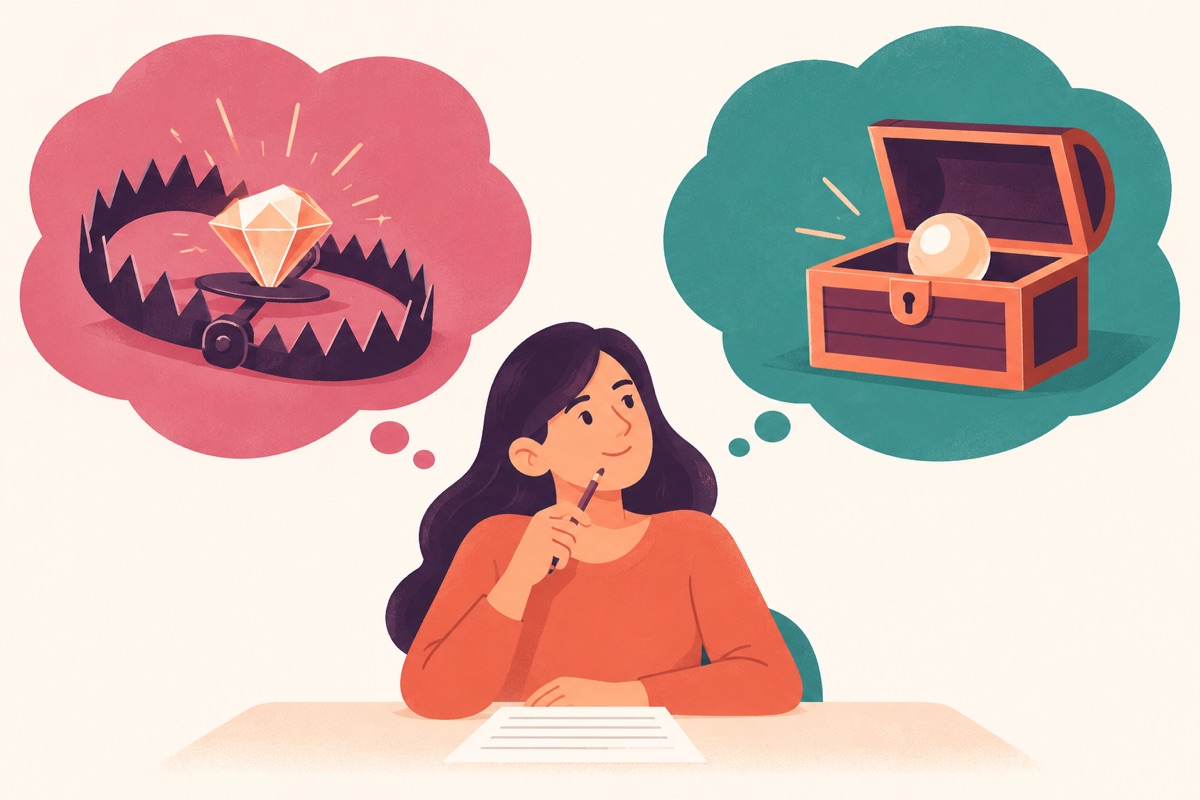
Here is a scene I watch play out every single week. You read a short science passage. You hit the question: "Which of the following can be inferred from the passage?" One choice jumps off the screen. It sounds sharp. It sounds like something a professor would say at a dinner party. You click it, feel smart for about four seconds, and then you find out it was wrong.
I'll bet that has happened to you more than once. I'll also bet that when you looked at the correct answer, your first thought was "THAT one? It's so obvious. How is that the answer?" Hold on to that feeling. It is the whole lesson.
What "inference" means on the GRE
In real life, an inference is a smart guess. You see wet streets, you guess it rained. On the GRE, that definition will cost you points. A GRE inference question asks you to find the statement the passage PROVES, even though the passage never says it in those exact words. Not what is likely. Not what is interesting. What MUST be true if every word of the passage is true.
These questions live in Reading Comprehension, the passage based questions inside the two Verbal sections. Each Verbal section gives you 20 questions in 30 minutes, so you average about 90 seconds per question. That is plenty of time to PROVE an answer. It is not enough time to argue with yourself about which clever choice the test writer "really meant."
Why the smart answer is the trap
The people who write this test know you want to look smart. So they build wrong answers that go one step past the passage. The passage says researchers "suspect" something, and the wrong answer says it is "the main cause." The passage says a thing happened once, and the wrong answer says it always happens. Those choices COULD be true. They might even be true in the real world. But could be true is worth exactly zero points.
So you have to decide what you want MORE: an answer that impresses you, or an answer you can prove. You don't get both.
Here's the test I want you to run on every single choice: Can I put my finger on the line that proves this? If yes, it stays. If you have to add the word "probably" to make it work, it dies. No appeals.
The mistakes I see most often
- Picking the answer that sounds the smartest. You treat the question like a chance to show off how well you understood the topic. INSTEAD: Pick the choice that says the LEAST beyond the passage while still being backed by it. On inference questions, modest is usually right.
- Bringing in what you already know. You know a little biology, so a choice that matches real science feels safe. INSTEAD: Pretend you know nothing outside the passage. If the proof isn't on the screen, it doesn't exist.
- Ignoring the strong words. "Main," "only," "always," "all," "never," "thrive." One word can turn a fine choice into a wrong one. INSTEAD: Circle the strongest word in each choice in your head and ask if the passage goes THAT far. Usually it doesn't.
- Reading the choices before you know what the passage proved. Then the choices start telling you what the passage said, and the trap wins. INSTEAD: Write your three line summary first. Then go to the choices with your own notes as the judge.
- Keeping "could be true" choices alive. You end up with three possible answers and pick the one that "feels" right. INSTEAD: Every choice is guilty until proven. If you can't point to the line, it's gone. You should rarely be stuck between more than two.
- Arguing with the answer key. You review a miss and think "well, MY answer could also work." Yes. That's exactly why it's wrong. INSTEAD: When you miss one, write down the word in your choice that went past the passage. That word is your lesson.
Same skill, harder format
The GRE also has passage questions where you pick every choice that works out of three. Same rule. Each choice gets the finger test on its own.
Notice what you just did. You used a small word like "however" to see the passage change direction. That's the same move that wins on two and three blank Text Completions, where the clue in the sentence tells you what the blank MUST mean. The GRE Verbal section keeps testing one thing in different outfits: can you stay inside the text?
And if dense passages slow you down so much that you skim and guess, the fix isn't more practice questions. It's reading tougher material on a regular schedule so the passages stop feeling foreign. That's why I keep telling people to read harder stuff EVERY day.
Your job today
Pull 10 inference questions you've already done. Official ones are best, like the passages in ETS's free POWERPREP practice tests. Redo every one, and for EACH answer choice, write one of two things on paper: the exact line that proves it, or the exact word that goes too far.
Don't just mark right or wrong. I want the proof line or the guilty word, for every choice, all 10 questions. That's 50 decisions. If you can't name the proof for your answer, you didn't infer it. You guessed it and got lucky.
Do that today. Then do it again next week with 10 new ones. The smart sounding trap will start to look exactly like what it is: an answer that wants to be true, sitting right next to one that has to be.