Two and Three Blank Text Completions: Start With the EASIEST Blank
Here is a scene I watch play out every single week. Someone opens a three blank Text Completion, reads the first line, hits blank (i), and freezes. They try each of the three choices. They read the line again. They try the choices again. Ninety seconds later they have nothing written down. Meanwhile the clue that would have cracked the whole thing open is sitting two lines lower, right next to blank (iii), waiting for them.
Nobody told them they had to start at the beginning. The GRE certainly didn't.
What you're actually looking at
A Text Completion is a short passage, one sentence or a few, with one or more key words taken out. Your job is to put the right words back. On the two and three blank versions, each blank gets its own small column of three choices. You only get the point if EVERY blank is right. There is no partial credit. You'll see these in both Verbal sections, which each give you 20 questions in 30 minutes.
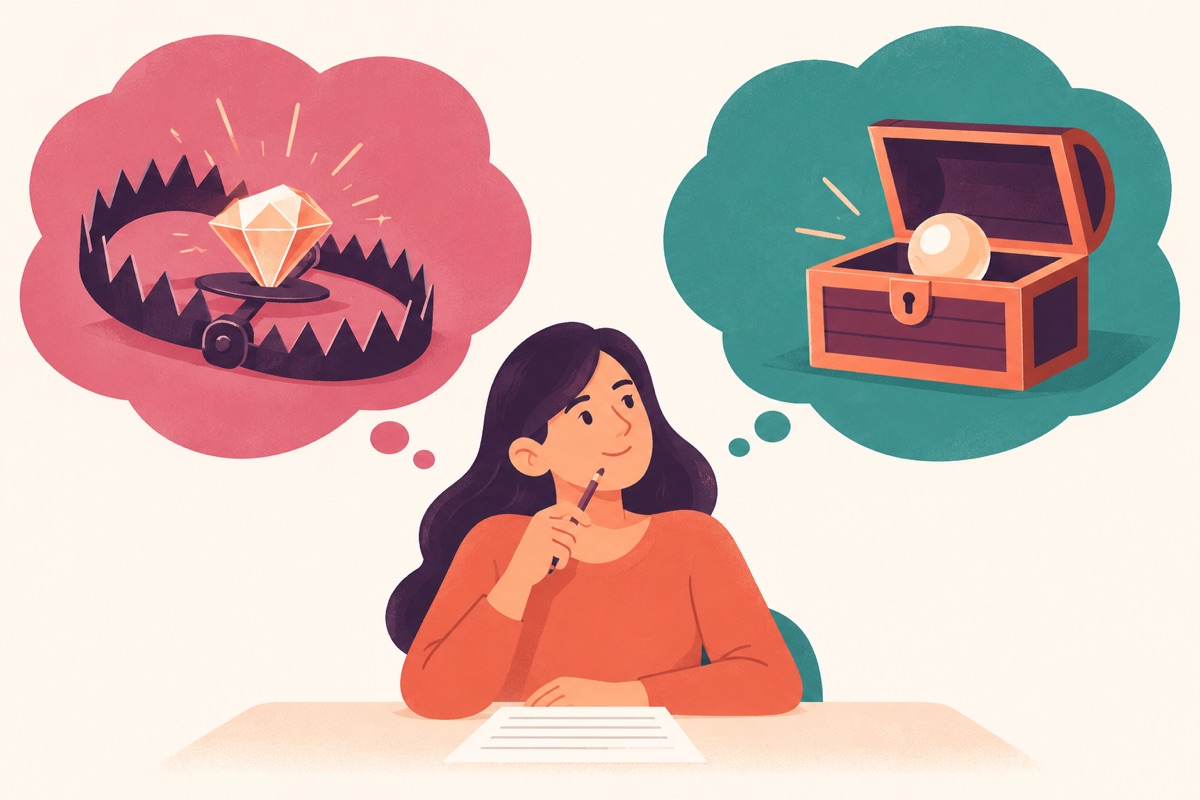
Stop reading for a second and think about what "no partial credit" does to your process. If blank (i) is a coin flip and you lock it in first, every choice you make after it is built on that guess. You're stacking bricks on sand.
The blanks are NOT numbered by difficulty
The test writer numbers the blanks from left to right because that's how sentences are read. That's it. The numbers tell you NOTHING about which blank is easy. In a lot of these passages, one blank has a clue parked right next to it, a phrase that basically defines the missing word for you. The other blanks only make sense once you know that answer.
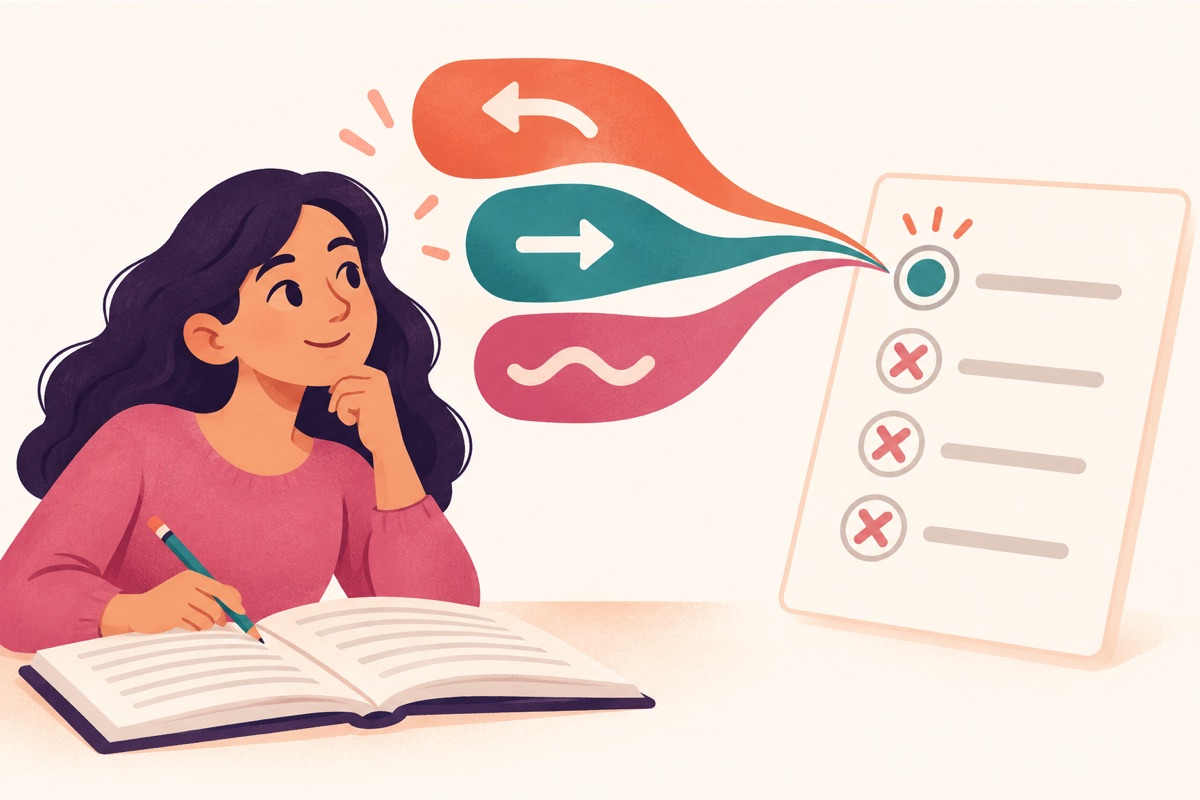
So your first move is not "solve blank (i)." Your first move is a question: which blank has the strongest clue? Start THERE.
Think about how a rock climber starts a route. They don't grab the smallest, slickest hold just because it's lowest on the wall. They find the first solid grip, put their weight on it, and use it to reach the next one. Same idea here.
The routine, step by step
- Cover the choices. Read the whole passage once, all the way to the end, before you look at a single answer.
- Hunt for the clue. Find the blank with the most direct evidence nearby: a definition, an example, a "because," a "though."
- Predict in your own words. Decide what kind of word goes there. It doesn't need to be fancy. "Strict" or "loose" is plenty.
- Write it down. On your scratch paper, jot the blank number and your word. Not in your head. On paper.
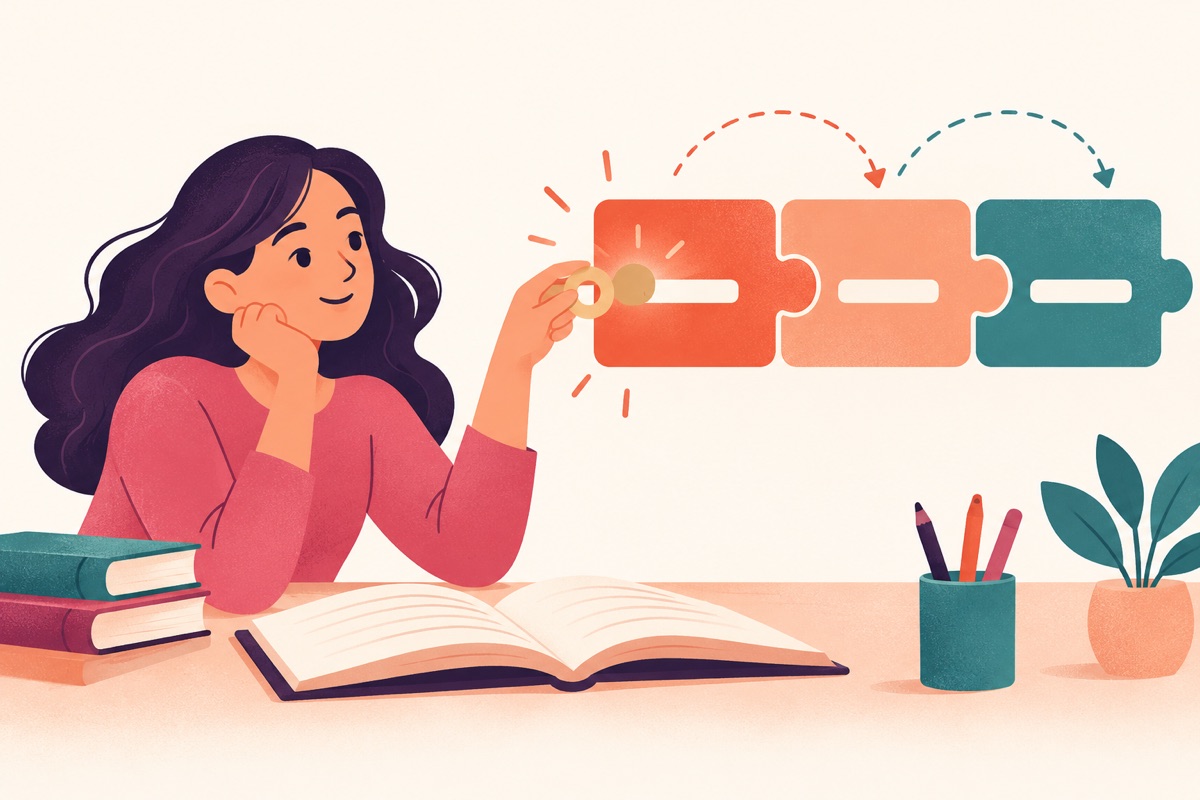
- Match, then move. Pick the choice that matches your word, then treat that answer as a brand new clue for the next blank.
- Read it all back. Plug every answer in and read the full passage once more. If it doesn't make sense as a whole, something is wrong.
Why plugging in everything is a losing plan
Some people skip the routine and just try every combination. Do the math on that. A two blank question has 3 times 3, or 9, possible answer combinations. A three blank question has 3 times 3 times 3, or 27. I'll bet you don't want to read the same passage 27 times with a clock running. And you shouldn't. Solve one blank with confidence and a three blank question drops to 9 options. Solve two and it drops to 3. Every blank you nail first makes the rest smaller.
The mistakes I see every week
- Starting at blank (i) because it comes first. Habit, not strategy. INSTEAD: spend five seconds scanning for the blank with the most direct clue and attack that one.
- Reading the choices before you predict. Three tempting words will pull you away from what the passage actually says. INSTEAD: cover the choices, predict your own simple word, then go looking for its match.
- Doing it all in your head. You'll lose track of what you decided for blank (iii) by the time you reach blank (i), and you'll re-read. INSTEAD: write the blank number and your predicted word on scratch paper. It takes three seconds and it saves you thirty.
- Treating a solved blank as "done." The answer you just found is now the best clue in the passage. INSTEAD: after every blank, ask what that answer tells you about the others.
- Skipping the final read. Three words that each look fine alone can still clash together. INSTEAD: read the full passage with all your answers in place before you click.
And if you keep missing the clues entirely, the issue might not be your method at all. It might be that dense writing still slows you down. The fix for that is simple and it is not glamorous: read harder stuff every day. The more tough prose you push through, the faster the clues jump off the page.
Your move
Here is what I want you to do TODAY. Pull up 10 two and three blank Text Completions from official practice material. Before you look at any answer choices, write down which blank you're going to start with and the exact words in the passage that made you choose it. Then solve each one using the routine above.
When you're done, check two things: how many you got right, AND how many times your "start here" blank was something other than blank (i). I'll bet that second number is bigger than you expect. Once you see it, you'll never sit frozen on blank (i) again.