Reading Comprehension: Stop Rereading the Passage
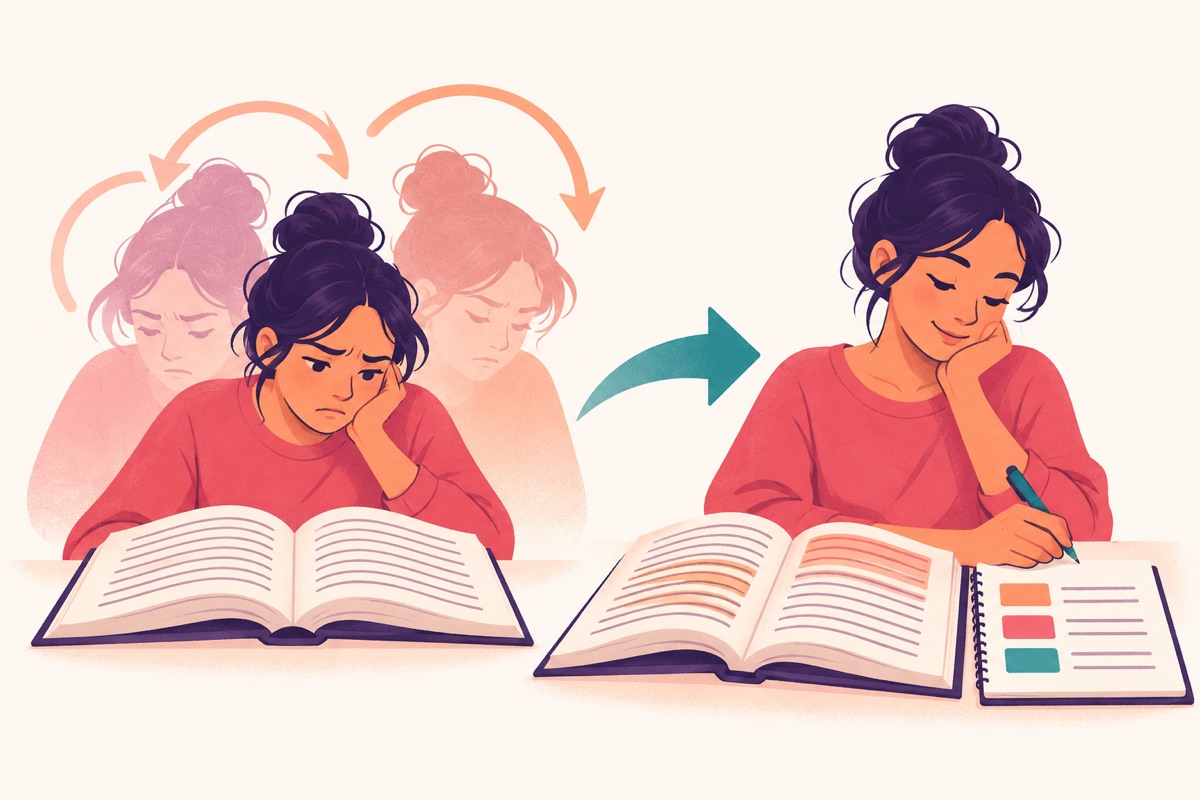
I watch it happen every week. A Test Taker gets to a Reading Comprehension passage (a block of text followed by questions about it), reads it, gets to the first question, and then their eyes slide right back up to the top. Then again after the second question. By the end they have read the same 300 words three times, and they still pick the wrong answer.
Here is the blunt verdict: reading a passage three times is NOT careful. It is lost. Careful readers read once and know where everything is. Lost readers read three times because they never wrote down what they found the first time.
The good news is that this is fixable, and fast. It is a habit, not a talent.
Why you keep going back to the top
Stop reading for a second and answer this honestly: when you finish a paragraph, can you say in five words what it was FOR? Not what it said. What it was for.
I'll bet that most of the time you can't. You read every word, you understood every sentence, and yet nothing stuck. That is not a reading problem. It is a memory problem, and memory problems on a timed test have one cure: paper.
Now the math. Each GRE Verbal section gives you 20 questions in 30 minutes, and some of those questions hang off passages. Say a passage takes you 2 minutes to read well. Read it three times and you have spent 6 minutes on one passage before you answer much of anything. Six minutes out of thirty is a FIFTH of the section. That time came from somewhere, and it usually comes from the last few questions, which you then rush and miss.
So your 'pacing problem' on Verbal is not really about the clock. It is about the rereading. Fix the cause and the clock fixes itself.
What to write after each paragraph
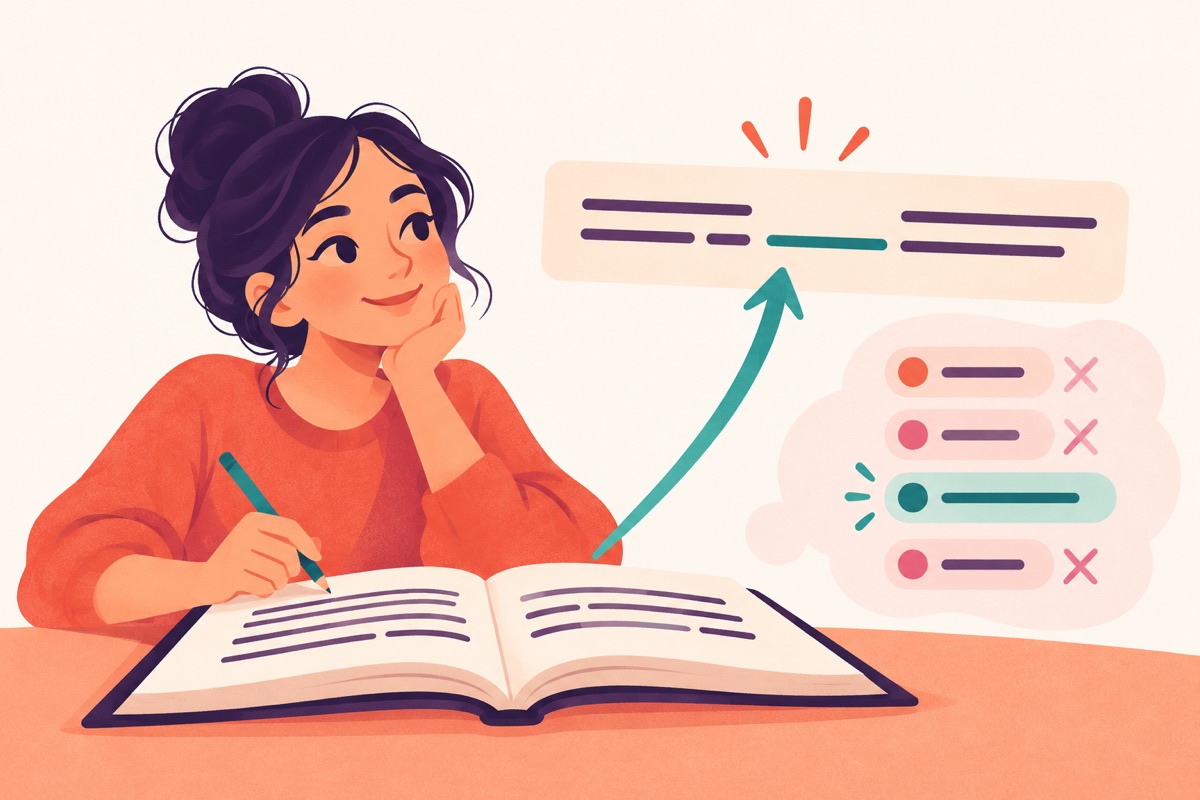
You are not copying the passage. You are building a map. After each paragraph, stop and write ONE short line, a few words at most, that answers three things:
- The point. What is this paragraph claiming? Who says it: the author, or someone the author is talking about?
- The turn. Did the author push back on something? Words like yet, however, but and on the other hand are where GRE questions live. If you see one, your note should show it, even with a simple arrow.
- The job. Is this paragraph giving an old view, an attack on it, evidence, a limit, an example? Tag it.
When you finish the whole passage, write one more line: the main point, in your own words. That one line answers most 'primary purpose' questions before you even see the choices.
This is the same skill behind Text Completion: the GRE rewards you for following the logic of a sentence or a passage, not for knowing every fancy word in it. Your notes are just that logic, written down.
Watch it work
Here is a short passage I wrote for this post, with two questions in the real GRE formats: a standard question with five choices and one answer, and a 'select one or more' question, where you get three choices and must pick EVERY one that is correct (no partial credit).
Notice what did NOT happen there. Nobody reread the passage. Each answer came from a note, and if you wanted to be extra sure, you went back to ONE sentence you already knew the location of. That is a check, not a reread.
The mistakes I see every week
Reading the passage, then 'taking notes' by copying whole sentences. You just read it twice, once with a pencil.
INSTEAD: A few words per paragraph. Use arrows and abbreviations. If a note takes longer than about ten seconds to write, it is too long.
Skipping the notes because 'it's a short passage.' Short passages are exactly where people get overconfident and miss the one qualifier that decides the answer.
INSTEAD: Every passage gets notes. Even one paragraph gets one line. Build the habit so it is automatic on Test Day.
Reading the answer choices before you know what you are looking for. Five tempting choices will happily pull you anywhere.
INSTEAD: Read the question, look at your notes, and predict the answer in your own words. THEN test the choices against your prediction, the same way you would test Sentence Equivalence choices against the meaning of the blank.
Rereading when you get stuck. Going back to the top feels safe. It is just stalling.
INSTEAD: If your notes cannot answer the question and one targeted look at the passage does not either, pick your best answer, mark it and move on. The GRE lets you mark questions and come back within the section, so use that, and spend the saved time on questions you CAN get.
You have to decide what you want MORE: the cozy feeling of having read every word perfectly, or the points. You cannot have both on a 30-minute clock.
Your move today
Grab one Reading Comprehension passage today. A free source is the practice material in ETS's POWERPREP practice tests, and the Verbal Reasoning page shows the question formats you will face. Read the passage ONE time. Write one line after each paragraph and one MAIN line at the end. Then cover the passage with your hand and answer every question from your notes alone.
Score yourself. Then look at which questions your notes could not answer and ask WHY. Was the turn missing? The limit? The job? That gap is exactly what your next set of notes needs to catch. Do it again tomorrow. One read. That is the standard now.