Text Completion Is a Reading Test, NOT a Vocabulary Contest
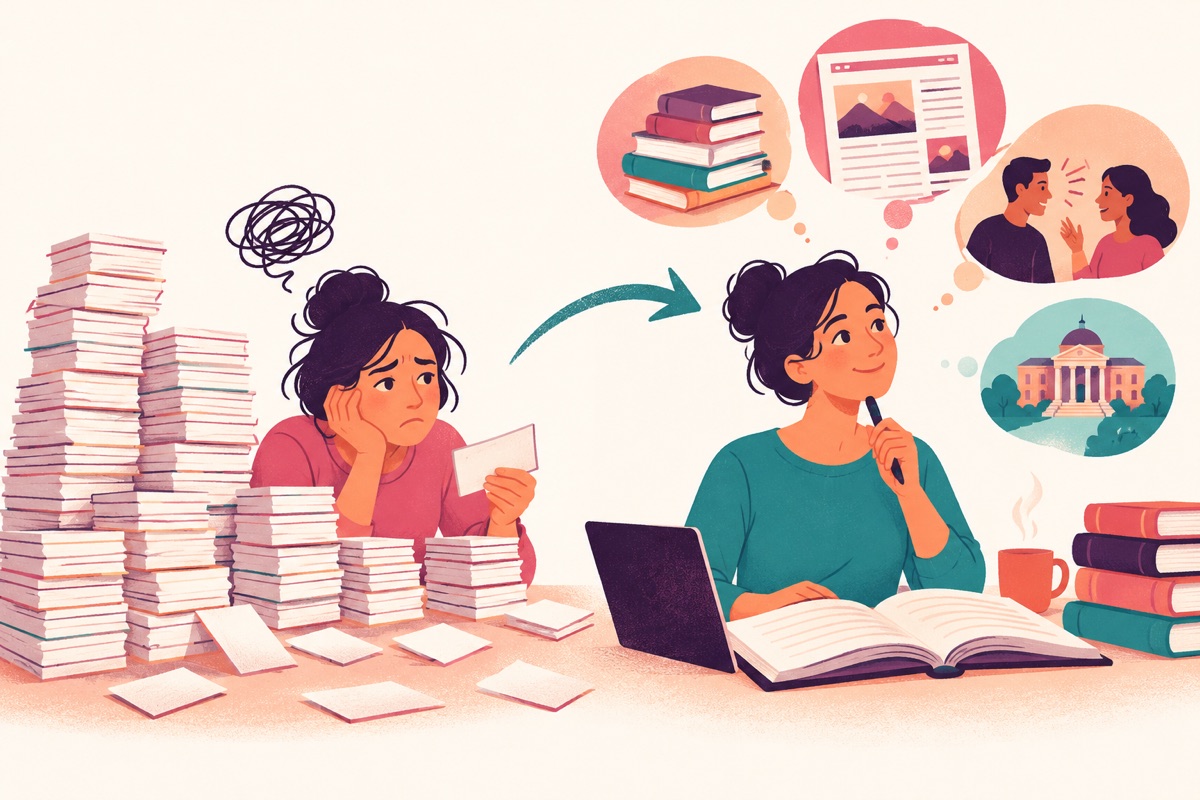
Here is a scene I watch play out every week. A GRE Test Taker reads a Text Completion question, drops straight down to the answer choices, sees pusillanimous, obdurate and sanguine staring back, and freezes. Then they decide the problem is that they don't know enough words. So they go buy a stack of flashcards.
That is the WRONG diagnosis. Your 'vocabulary problem' is almost never a vocabulary problem. It's a READING problem. The answer to nearly every Text Completion is sitting right there in the sentence, and you skipped past it to stare at the choices.
What Text Completion actually is
A Text Completion is a short passage, from one sentence up to a few, with one, two or three blanks in it. A one blank question gives you five choices. A two or three blank question gives you three choices for EACH blank, and you have to get every blank right to earn the point. There is no partial credit. You'll see these in both Verbal sections, and each of those sections gives you 20 questions in 30 minutes, per ETS's GRE General Test page.
Now stop reading and think about this for a moment. The people who write these questions need every question to have ONE defensible answer. Not a 'best guess.' Not a 'sounds smart.' One answer that they can prove. How do they prove it?
They put the proof IN THE SENTENCE. Every time.
The two things the sentence always gives you
The sentence hands you two tools. Once you know to look for them, you'll start seeing them everywhere.
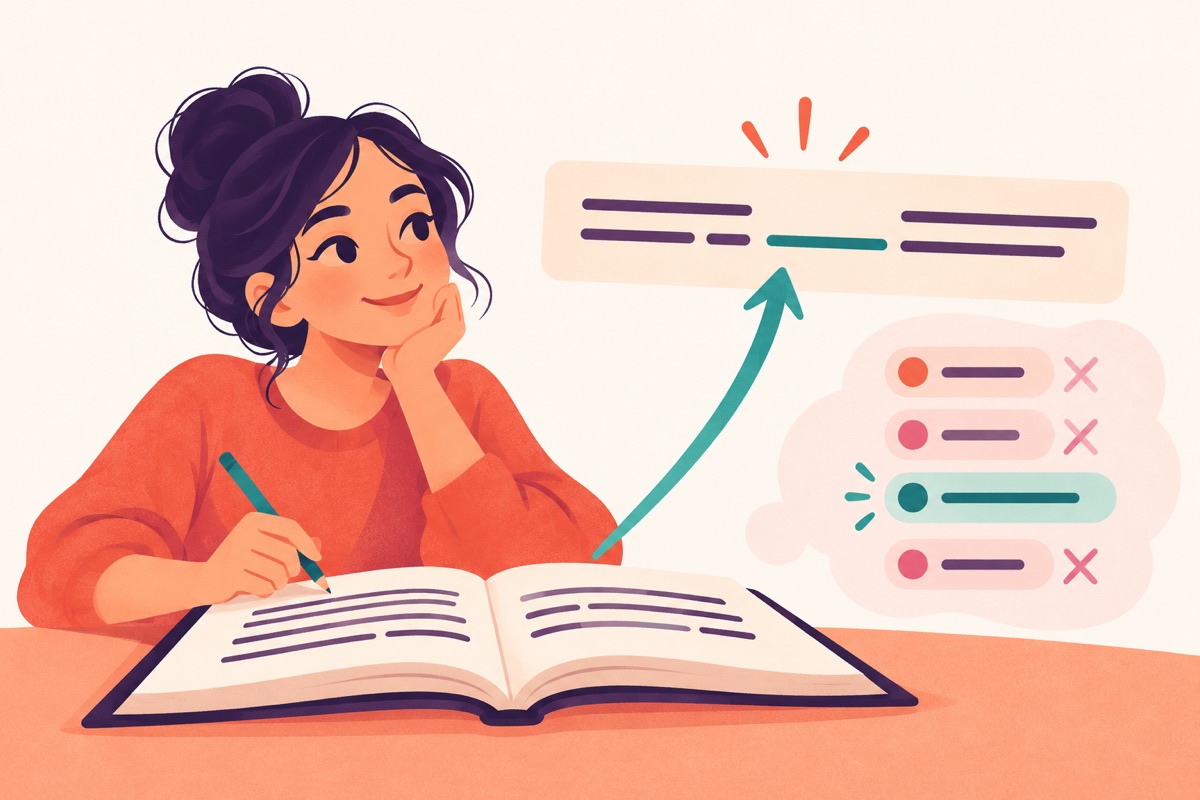
- The clue. This is the part of the sentence that tells you what the blank has to mean. It's usually a description, an example or a result. If the blank is about a person, the clue tells you what that person did.
- The signal. These are the little words that tell you which DIRECTION the blank goes. Words like although, but, despite and yet say the blank flips away from the clue. Words like because, and, so and a colon say the blank agrees with the clue.
Clue plus signal gives you the meaning of the blank. You don't need the answer choices to get there. In fact, the choices get in the way.
The method: cover, predict, write, THEN match
- Cover the answer choices. Literally put your hand on the screen if you need to.
- Find the clue and the signal.
- Come up with your OWN word for the blank. It can be simple. 'Quiet' is fine. 'Good' is fine. 'Not lazy' is fine.
- Write that word on your scratch paper. Yes, actually write it.
- Now look at the choices and hunt for the one that matches your word.
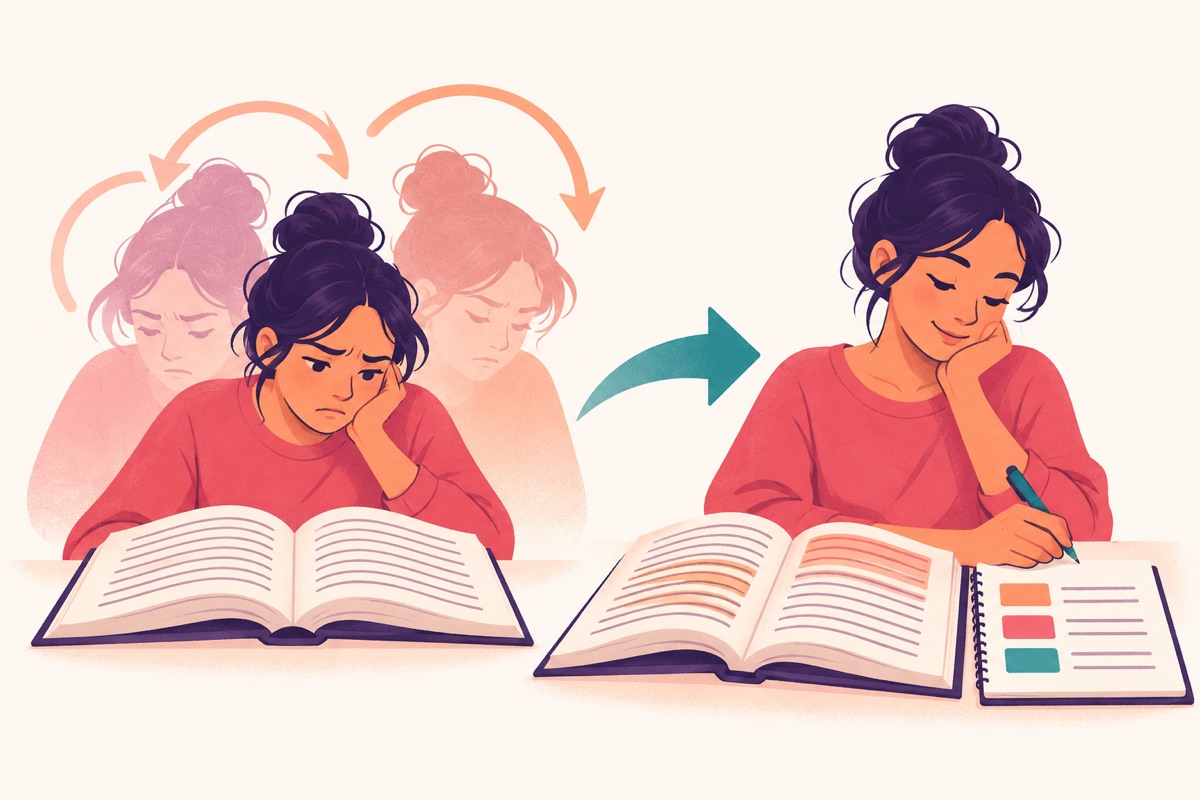
Step 4 is where the pride kicks in. 'I don't need to write it down, I'll remember it.' No you won't. The second you see five shiny words, your prediction evaporates and you start picking the one that 'feels' right. Writing it down takes three seconds. It's the cheapest insurance on the entire test.
Two or three blanks: start with the EASY one
Most people attack the first blank first because it comes first. That's not a strategy, that's just reading left to right. Instead, look for the blank with the strongest clue and solve that one. It often locks in the meaning of the others.
And remember: no partial credit. Getting two out of three blanks right scores exactly the same as getting zero right. So every blank needs proof from the sentence.
The mistakes I see every week
Reading the choices before you have your own word. The choices are built to pull you off course. Each wrong answer is there because it 'sounds' like it could fit.
INSTEAD: Cover the choices, predict, write your word on paper, then match.
Ignoring the little words. 'Though,' 'despite,' 'because,' a colon. People skim right past them, and those words decide the direction of the blank.
INSTEAD: Circle the signal in your notes. Write a quick arrow: same direction or flip.
Picking the fanciest word. 'It's the hardest word, so it must be the answer.' That's not reasoning, that's superstition.
INSTEAD: Ask one question of every choice: does the sentence PROVE this meaning? If not, it's out, no matter how impressive it looks.
Solving blanks in order. The first blank is often the vaguest one.
INSTEAD: Find the blank with the strongest clue, solve it first, and let it guide the rest.
Sitting on a question you can't crack. You can skip, mark and come back inside a section. Burning three minutes on one blank steals time from questions you'd get right.
INSTEAD: Make your best match, mark it, move on, and return if you have time at the end of the section.
Blaming vocabulary for every miss. Sometimes you really don't know a word. But that's not the reason MOST of the time.
INSTEAD: When you review a miss, ask: did I have my own word before I looked? Did I find the signal? Only after those two checks do you get to say 'I didn't know the word.'
So does vocabulary matter at all?
Yes. Knowing more words helps. I'm not going to pretend otherwise. But here's the forced choice: what's MORE useful on Test Day, knowing 3,000 words you half remember, or being able to find the meaning of the blank in every sentence the GRE throws at you?
Here's the thing about the second skill: it also helps when you DON'T know a word. If you've proven the blank means 'quiet' and you know four of the five choices aren't 'quiet,' the fifth one wins, even if you've never seen it before. Elimination works on words you don't know. Flashcards don't help you read a sentence.
And I'll bet that when you go back and look at the Text Completions you've missed, most of them were not lost on some impossible word. They were lost because you looked at the choices first and picked the one that sounded good. The data will tell you. Go check it.
Your challenge for today
Pull out ten Text Completion questions you've already done, including the ones you got right. Cover the choices. For each one, write down three things on paper: the clue, the signal and your own word for every blank. THEN uncover the choices and match.
Count how many your own word would have nailed. Then count how many you originally missed that your own word gets right now. That gap is your real problem, and it has nothing to do with flashcards. Do it tonight. Not this weekend. Tonight.