Sentence Equivalence: Find the PAIR, Not the Favorite
Here is a mistake I watch people make every single week. A Test Taker reads a Sentence Equivalence question, spots one gorgeous word in the answer choices, falls in love with it, clicks it, and then goes shopping for a second word to keep it company. Ninety seconds later they have two answers, one wrong question, and no idea why.
I'll bet the last time you missed one of these, you got ONE of the two words right. Go check. I'll wait.
That near miss is not a 'vocabulary problem.' It's a process problem. And process problems are fixable.
What you are actually being asked to do
Sentence Equivalence (people call it SE) is one of the question types in the two Verbal sections of the GRE. Each Verbal section gives you 20 questions in 30 minutes. An SE question gives you one sentence with one blank and six answer choices. You have to pick the TWO choices that each fit the blank and that make the two finished sentences mean the same thing. Both have to be right. There is no partial credit. You can read the official description on the ETS Verbal Reasoning page.
Stop and think about what that rule does to you. If the right answer is always a PAIR, then a word with no partner among the choices cannot be right. It doesn't matter how good it sounds. It doesn't matter how smart it makes you feel. A lonely word is a dead word.
So the question is never 'which word do I like best?' The question is 'which two words are twins, and do those twins fit the sentence?'
The method, step by step
- Cover the choices. Read only the sentence first.
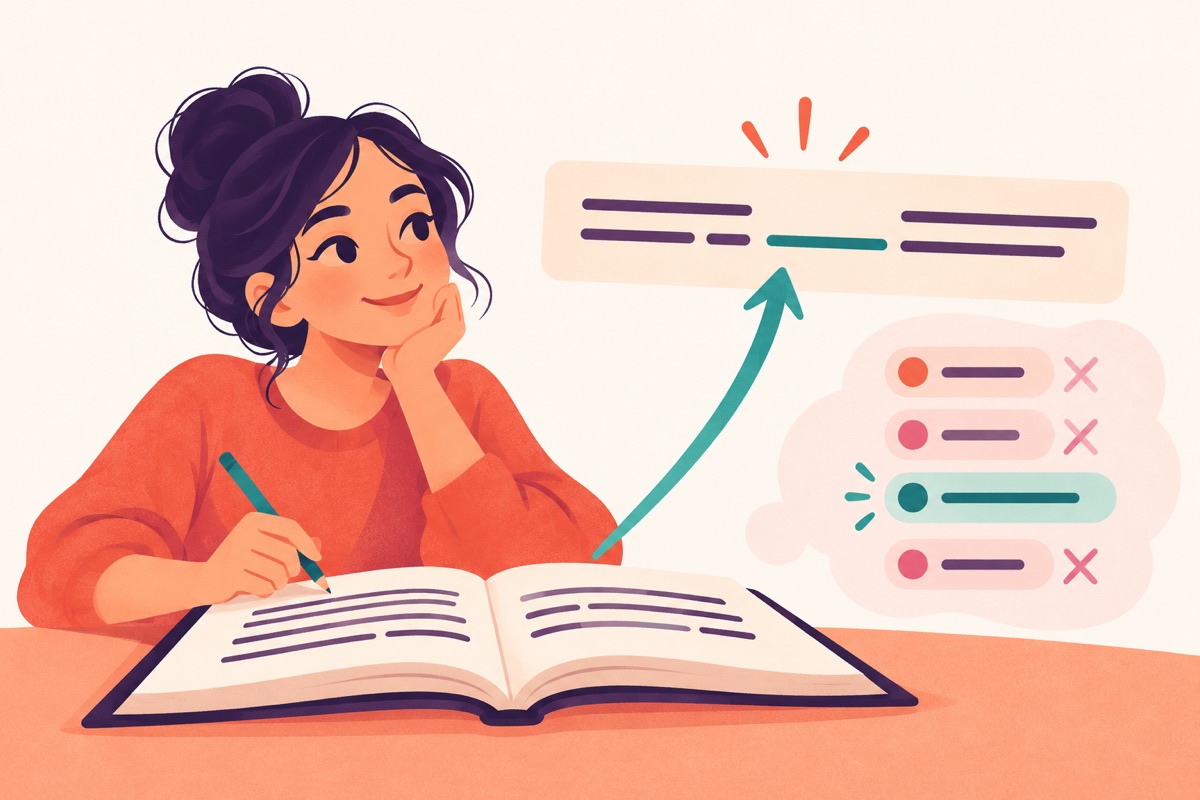
- Find the clue. Somewhere in the sentence is a phrase that tells you what the blank must mean. Circle it in your head, then write it on paper.
- Find the pivot. Words like though, but, far from and despite flip the meaning. Words like and, because and so keep it going the same way.
- Predict. Write your OWN word for the blank on your scratch paper. Plain words are fine. 'Wordy' is a perfectly good prediction.
- Hunt the pairs. Now look at the six choices. Look for words that mean roughly the same thing as each other.
- Match the pair to your prediction. The pair that matches your word wins.
This is the same skill I talked about in Text Completion Is a Reading Test, NOT a Vocabulary Contest. The sentence tells you the answer. The choices are just where you go to collect it.
The pair is necessary. It is NOT enough.
Here's where the clever Test Takers get burned. They learn 'find the pair' and then click the first two synonyms they see. The GRE knows you might do that. Sometimes the choices hold TWO pairs, and only one of them fits the sentence. That's why step 4 exists.
Notice that every step there lived on paper. The prediction, the cross out, the flip. If you tried that one in your head and got it right, great. Now ask yourself if you'd get it right at the end of a long test, tired, with the clock ticking.
The mistakes, and what to do INSTEAD
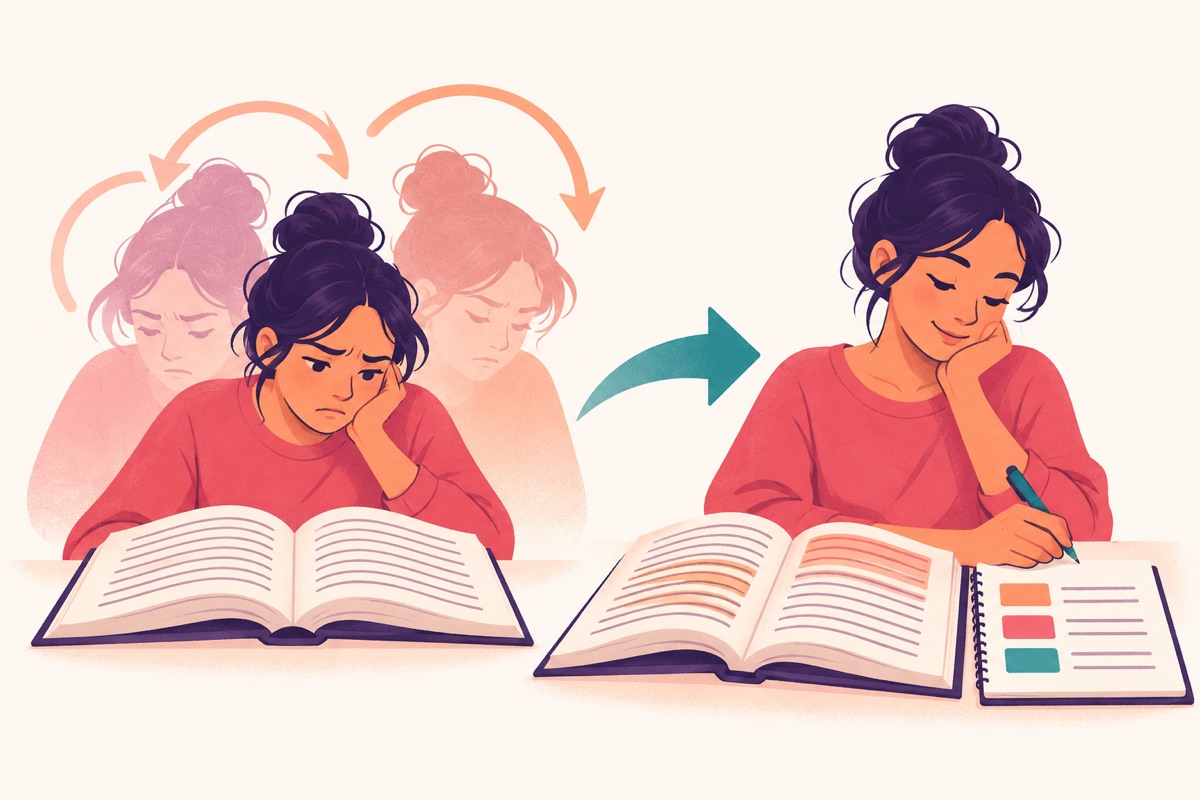
- Reading the choices before the sentence. The moment you see the choices, your brain picks a favorite and starts arguing for it.
INSTEAD: Read the sentence first and write your own word before you look at a single choice. - Picking the word that 'sounds smart.' Big words feel safe. They aren't.
INSTEAD: Before you click any word, name its twin. No twin, no click. - Picking two words that each fit, but don't match each other. 'Eloquent' and 'wordy' can both describe a speech, but they don't mean the same thing, so the two sentences don't mean the same thing.
INSTEAD: Plug each word in separately. Read both sentences. If they don't say the same thing, you don't have the pair. - Trusting the first pair you find. As you just saw, a pair can be a trap.
INSTEAD: Check the pair against your prediction, and check your prediction against the pivot word. - Freezing on a word you don't know. You won't know every word. Nobody does.
INSTEAD: Work with what you DO know. If you find a clean pair of known words that matches your prediction, take it and move on. If a known word fits perfectly but has no partner among the words you know, its twin might be the word you don't know. And if you are truly stuck, you're allowed to mark the question, move on, and come back later in that same section. - Doing it all in your head. This is pride, and pride costs points.
INSTEAD: Write your prediction, write A to F, and cross out the dead words. It takes seconds and it stops the silly mistakes.
Why this is free points
Think about what you just learned. On a question with six choices, you can often kill two or three of them without knowing what they mean, just because they have no partner. That's not guessing. That's using the rules of the question against the question.
What do you want MORE: to feel clever about the fancy word, or to get the question right? You only get to pick one.
Your challenge for today
Pull up 10 official Sentence Equivalence questions. The free POWERPREP practice material from ETS is a good place to find them. Do them with the method above, and follow one hard rule: you must WRITE your prediction on paper before you look at the choices. Every time.
Then grade yourself and count two things. How many did you miss? And on how many of those misses did you get ONE of the two words right? That second number is your 'favorite word' problem, measured. Write it down, and then go redo every miss until you can point to the clue, the pivot and the pair.
Don't do another SE question until you've done those 10 that way.