Sleep Is a Study Tool. Treat It Like One.

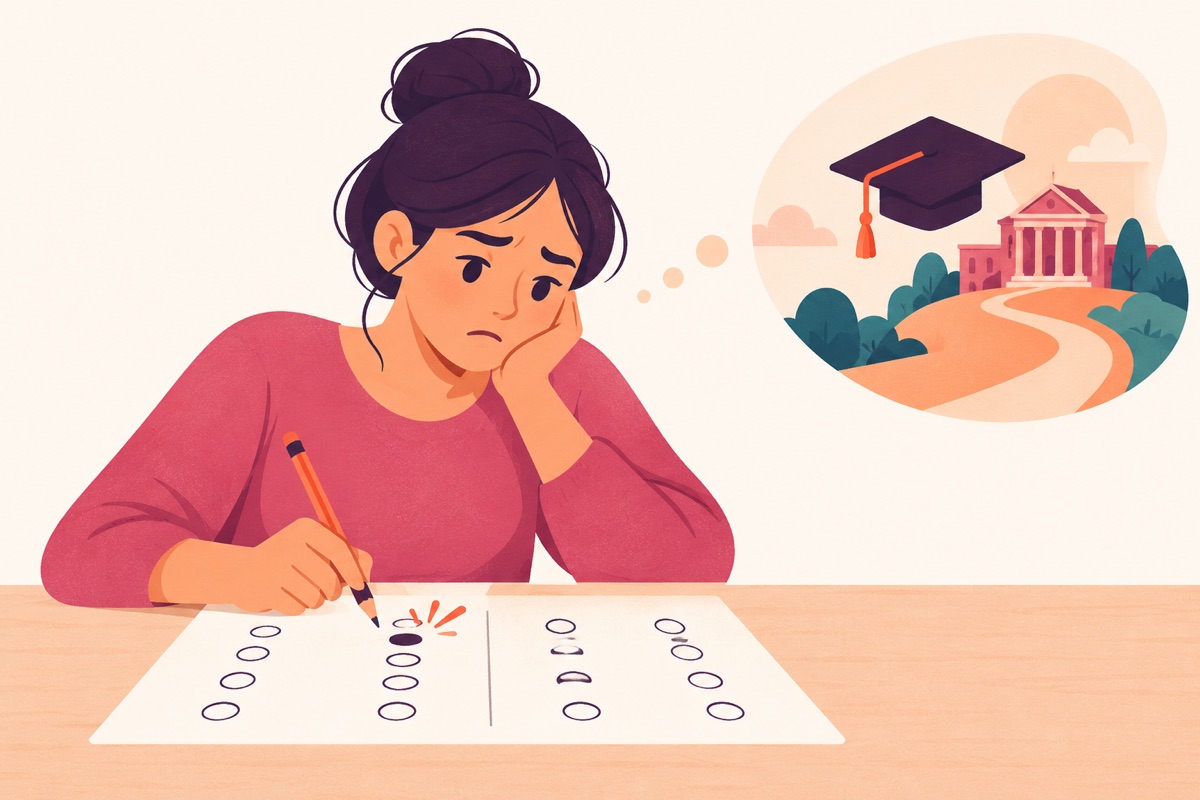
It's 1:40 in the morning. Your coffee went cold an hour ago. You just finished your fiftieth Quant question of the night, and you feel like a warrior. Then you check your answers. The last eight? Mostly wrong. Not hard questions, either. You dropped a negative sign. You misread "at least" as "at most." You solved for x when they asked for 2x.
So you decide to do ten MORE, to "fix" it.
THAT is a terrible idea. Here's my blunt verdict: late night cramming isn't dedication. It's practice at making mistakes. Every question you do on a fried brain trains the sloppy habits you're trying to kill. The good news is that this is one of the easiest problems in GRE prep to fix, because it's 100% in your control.
Why sleep matters MORE on the shorter GRE
Look at the test as it stands today. Since September 22, 2023, the GRE General Test runs 1 hour 58 minutes. You write one Issue essay in 30 minutes. Then come two Verbal sections (12 questions in 18 minutes, then 15 in 23 minutes) and two Quant sections (12 questions in 21 minutes, then 15 in 26 minutes). There's no unscored section, and there's no scheduled break. Verbal and Quant are each scored from 130 to 170, and the writing is scored from 0 to 6.
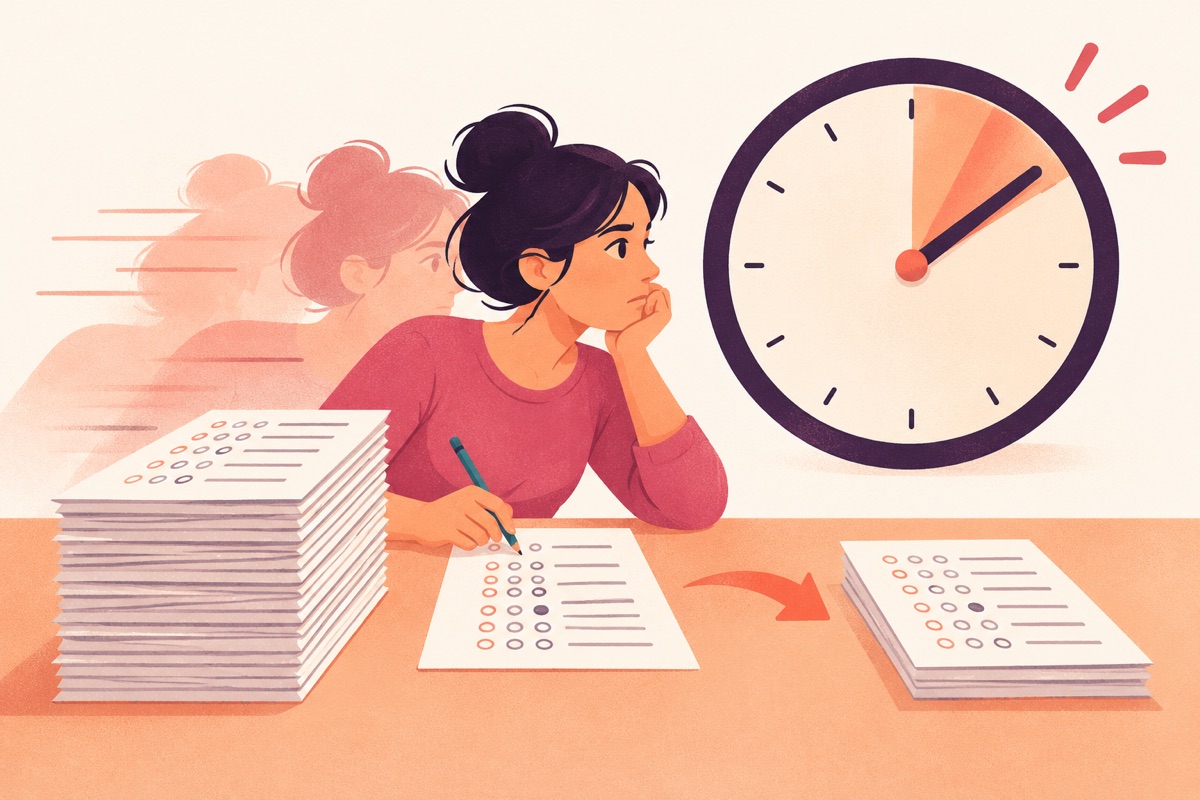
Stop and do the math on that. In the first Verbal section you get 1.5 minutes per question. In the first Quant section you get 1.75 minutes per question. That's not a lot of room. And with fewer questions, each one carries more weight. I made this point in Fewer Questions, Less Room for Silly Mistakes: a single dropped point stings more now than it did on the old, longer test.
Now add the missing break. You sit down and you stay locked in for two STRAIGHT hours. If you walk in short on sleep, there's no ten minute pause where you get to splash water on your face and reset. I covered how to build that stamina in No Break on the New GRE, but here's the short version: you can't train focus on a brain that's running on fumes.
Silly mistakes are a symptom. Fatigue is often the cause.
When Test Takers tell me they have a "careless mistake problem," I ask one question: what time was it?
Don't read another word until you've done this. Pull up your last ten wrong answers. Next to each one, write the time of day you did it and how long you'd already been studying. I'll bet the mistakes are NOT spread evenly. I'll bet they bunch up late at night, or deep into a long session, when you were "just finishing one more set."
If that's what your data shows, then you don't have a math problem or a reading problem. You have a tired problem. And you can't fix a tired problem with more questions.
Here's what that looks like on a real GRE question.
Notice that nothing in that question is hard. Every step is something you already know how to do. The ONLY thing standing between you and the point is whether your brain is awake enough to ask, "what else could x be?"
The 5 sleep mistakes I watch people make
Pulling an all nighter before the test. This is the classic. You feel like you're squeezing in one last advantage. You're not. You're showing up to a two hour test with no break on a brain that never reset.
INSTEAD: Make the day before the test a light day. Do a short, easy review in the morning or early afternoon, then stop. Pack what you need, plan your route (or set up your room if you're testing at home) and get to bed at your normal time.
Studying until you crash, every night. Lots of people treat bedtime as "whenever I can't keep my eyes open." That means every session ends with your worst work, and you go to sleep with those sloppy habits as the last thing you practiced.
INSTEAD: Set a hard stop time and keep it. Leave some space between your last question and your pillow. End each session while you're still sharp, so the last thing you practiced is good work.
Counting hours instead of quality. "I studied for four hours" sounds great. But if the last ninety minutes were full of silly mistakes, you didn't study for four hours. You studied for two and a half, then practiced being careless.
INSTEAD: Track your accuracy across a session. When the silly mistakes start piling up, that's your signal to STOP, not to push. Students study. GRE assassins train, and training means quitting a drill when your form breaks down.
Practicing at a different time of day than you'll test. Say you do all your prep at 11 pm, then you book an 8 am test. You've trained your brain for a completely different event.
INSTEAD: When you're booking your test date, pick a time of day when you're actually sharp. Then take your practice tests at THAT time. ETS's free POWERPREP practice tests are a good place to do this. Treat each one like the real thing: same start time, same room setup, no breaks.
Flipping your schedule the night before. If you normally go to bed at 1 am and your test is at 8 am, you can't just lie down at 9 pm the night before and expect to fall asleep. You'll stare at the ceiling and stew.
INSTEAD: Shift your schedule in the week or two before the test. Move bedtime and wake time earlier a little at a time, so by Test Day your body already treats that morning hour as normal.
"But I don't have TIME to sleep more"
I hear this every week, so let's deal with it head on. You have a job, maybe a family, maybe classes. Your test date is coming. Sleep feels like the one thing you can cut.
So here's the forced choice. What do you want MORE: to FEEL like you worked hard, or to EARN a higher score? Because those are not the same thing. The GRE will give you the score you earn, and it doesn't hand out bonus points for being exhausted.
If your schedule is truly packed, cut the low value stuff before you cut sleep. Cut the late night sets where you're getting half of them wrong. Cut rereading notes you already know. Cut the third practice test in one week. A practice test is a measuring device. It tells you where you stand; it doesn't make you better. One a week, done well, beats three done tired.
And remember, the shorter test didn't change your pace per question. You still need to read carefully, take notes on paper and check your work. All three of those get worse when you're tired. Sleep isn't time away from your prep. It's what makes the prep stick.
Your challenge for today
Tonight, do two things.
First, pick a hard stop time for studying and write it down on paper where you'll see it. Not "around midnight." An exact time. Then keep it.
Second, do the check I asked for earlier. Take your last ten wrong answers and write down when you did each one. If the mistakes bunch up late, you've just found your biggest, cheapest score gain, and it costs you nothing but a pillow.
Then go to bed. That's not slacking. That's training.