Probability: Count What You Want, Count What's Possible

Say you're halfway through your second Quant section. A question shows up with two dice in it. Or a bag of marbles. Or three people picked out of a hat. Your stomach drops. You scribble a formula you half remember from high school, you get a number that isn't in the answer choices, and you guess. Ninety seconds gone, and you stay rattled for the next three questions.
I'll bet the math was NOT the problem. I'll bet you never wrote down the two things every probability question is actually asking for.
Two counts. That's the whole game.
Probability is the chance that something happens, written as a fraction. An outcome is one way that things can turn out. Here's the fraction:
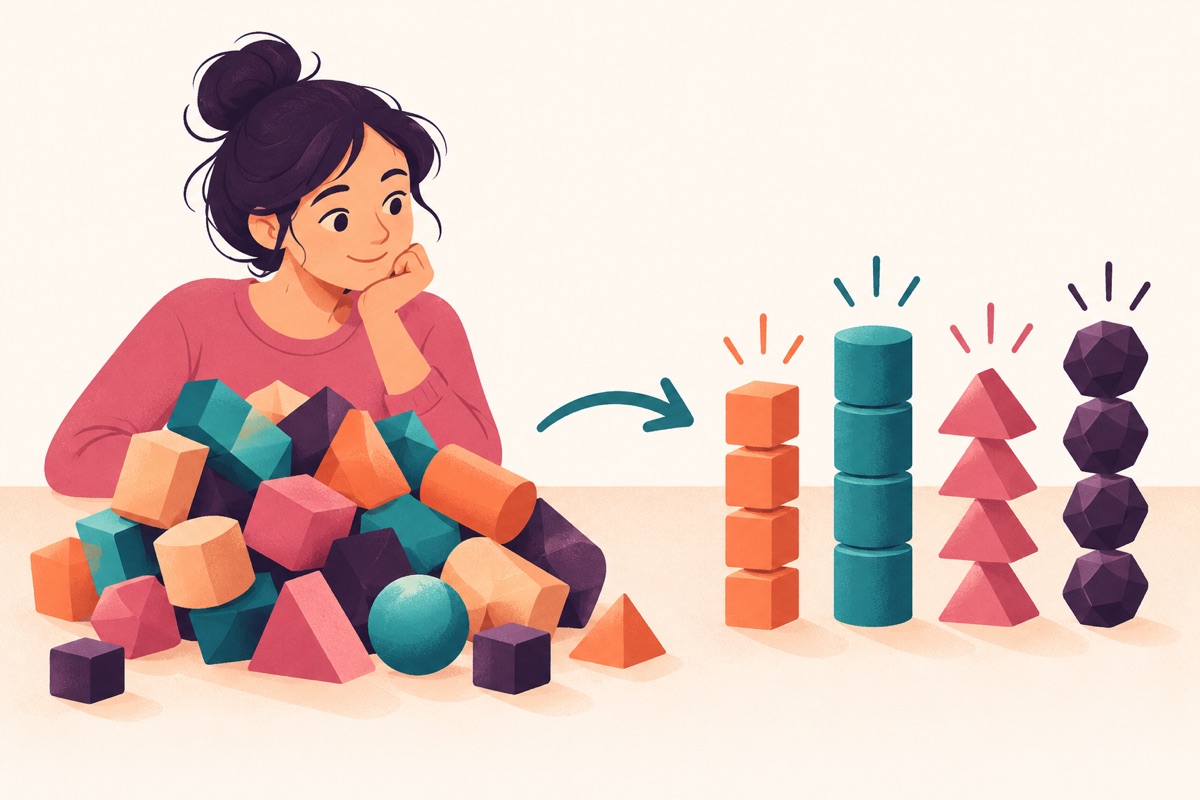
Probability = the number of outcomes you WANT, divided by the number of outcomes that are POSSIBLE.
That's it. Top count over bottom count. Nearly every probability question on the GRE is that fraction wearing a costume. If that sounds a lot like a part to whole fraction, it is. Probability is just a cousin of ratios, and you don't need fancy equations for those either.
So stop treating these questions like a special topic that needs special formulas. Treat them like a counting job. And counting is something you do on PAPER, not in your head.
Write W and P before you do anything else
Here's the habit. The moment you see a probability question, write two letters on your scratch paper:
- W = how many outcomes you want
- P = how many outcomes are possible
Fill in P first. It's usually easier, and it tells you how big the world is. Then fill in W. If W is small, LIST the outcomes. Don't be too proud to list. A list of six items takes fifteen seconds and it can't lie to you.
One more free check: a probability is never less than 0 and never more than 1. If your fraction is bigger than 1, your top and bottom are mixed up.
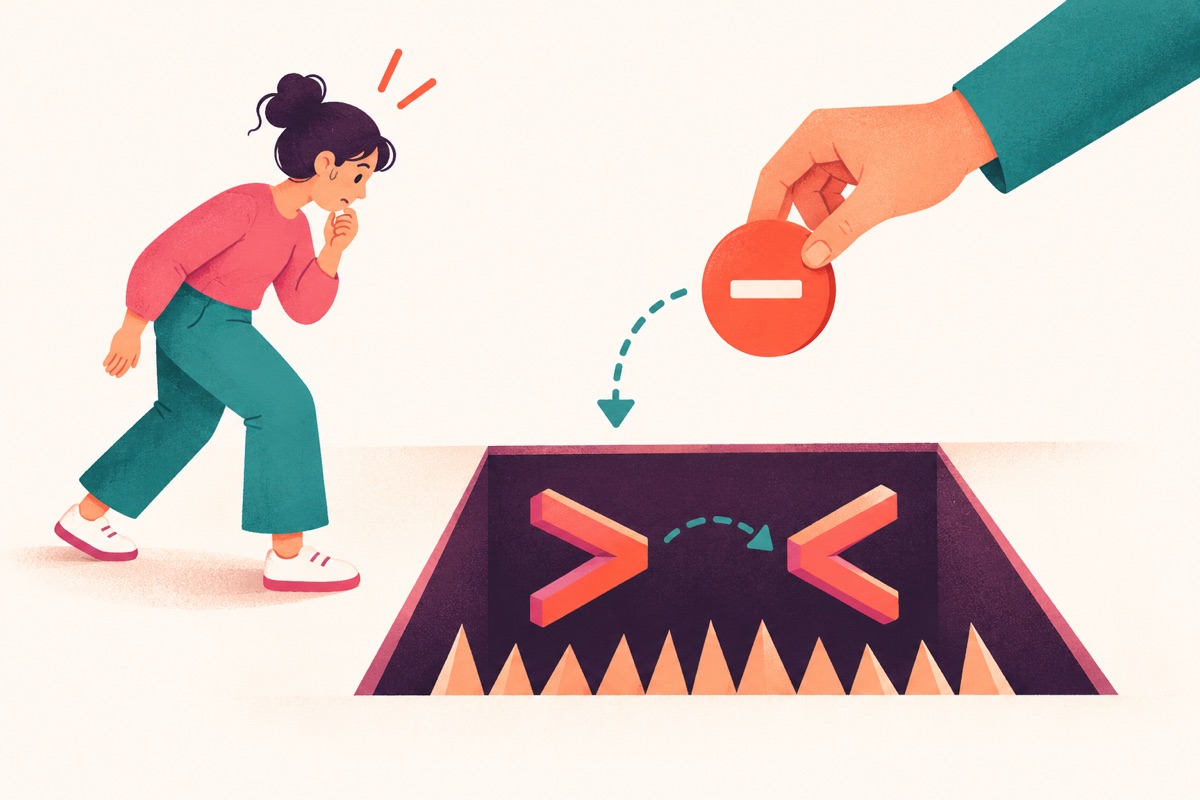
The order trap: paint your dice
Why is 1/7 wrong? Because the outcomes in your count have to be equally likely. Paint one die red and one die blue. A red 2 with a blue 6 is a DIFFERENT roll from a red 6 with a blue 2. Both can happen. But a red 4 with a blue 4 can only happen one way. If you lump the pairs together, you're treating {4, 4} like it's just as likely as {2, 6}, and it's only half as likely.
So here's the rule: label everything. Red die, blue die. Marble 1, marble 2, marble 3. When every item has its own name, every outcome is equally likely, and your two counts will be honest.
"Without replacement" changes the counts
Without replacement means once you pull something out, it stays out. You don't put it back. That shrinks what's left for the next pick. Watch what happens when people miss that word.
Notice something? The list took maybe thirty seconds, and it didn't depend on remembering any formula. You have 35 minutes for each Quant section of 20 questions, as laid out on the official Quant section page. That's an average of 1 minute 45 seconds a question. A clean list fits in that time with room to spare. A panicked formula hunt does not.
When you see "at least one," count the opposite
Same bag. What's the probability that at least one marble is blue? You could count pairs with one blue and pairs with two blues. Or you could notice that "at least one blue" is everything EXCEPT "no blue," and "no blue" is just "both red," which you already counted.
1 − 3/10 = 7/10.
Check it against the list: R1B1, R1B2, R2B1, R2B2, R3B1, R3B2, B1B2. Seven pairs out of 10. It matches. When the thing you want has a lot of cases, count the thing you DON'T want and subtract from 1.
5 mistakes I watch people make every week
- Grabbing a formula before counting anything. You remember there's a thing with factorials, so you start plugging. Half the time it's the wrong formula for the question.
INSTEAD: Write W = and P = on your paper first. Every time. Then decide if you even need a formula. Usually you don't. - Counting in your head. "Sum of 8... that's like 4 ways." It isn't.
INSTEAD: List the outcomes when there are fewer than a dozen or so. It's brute force, and brute force is a perfectly good tactic when it's fast and it's right. - Lumping outcomes that aren't equally likely. Treating {4, 4} the same as {2, 6} is the classic.
INSTEAD: Label every die, every marble, every person. Paint the dice. Then count. - Skimming past "without replacement." It's two words, and it changes the answer.
INSTEAD: When you take notes on the prompt, write "no replace" and actually cross out the item you drew. Your next count uses what's left. - Grinding "at least one" case by case. More cases means more chances for a silly mistake.
INSTEAD: Count the opposite and subtract from 1. Then, if you have time, check it with a quick list.
Look at that list again. Not one of those mistakes is "didn't know enough math." They're all process mistakes. That's the same story you'll find with mean, median and spread: the scary topic isn't hard, people just skip the notes.
Your move today
Stop reading and do this. Pull five probability questions from your practice material, including two you got WRONG before. For each one, before you touch the on screen calculator, write W = and P = on paper and fill them in by listing or labeling. Then look at the ones you missed the first time and name the exact reason: order, replacement, or skipping the opposite. Not "I'm bad at probability." The EXACT reason.
If you can't name it, you're not done reviewing that question yet.