Geometry: Label EVERYTHING Before You Solve Anything
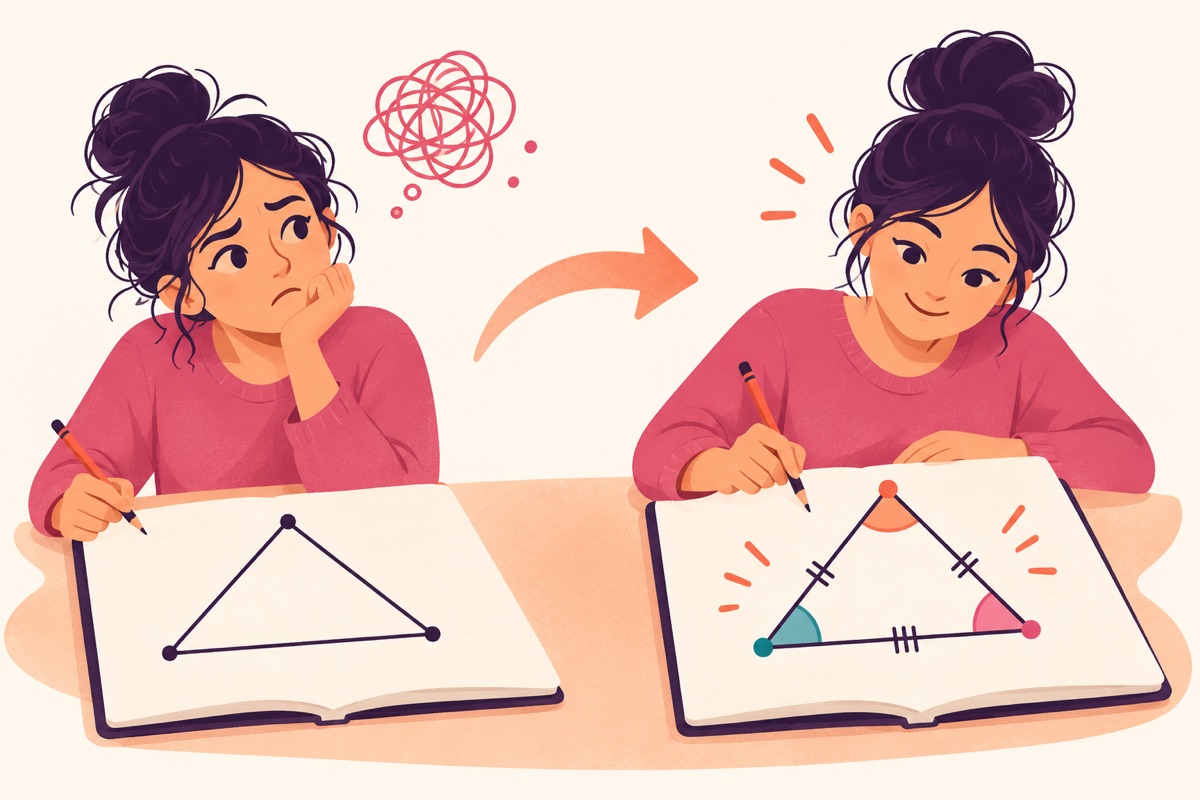
You see the triangle. You see the numbers. You start doing math in your head before you've even finished reading. Ninety seconds later you're staring at five answer choices, none of them match what you got, and you go back to read the question AGAIN. I watch people do this every single week. The verdict is always the same: the mistake didn't happen in the math. It happened before the math started.
Here's the rule. On every GRE geometry question, you draw the figure on your paper and you label EVERY fact before you solve anything. Every length. Every angle. Every word that says two things are equal. Every fact the question hides from you, too. Then, and only then, you start working.
Why the label comes first
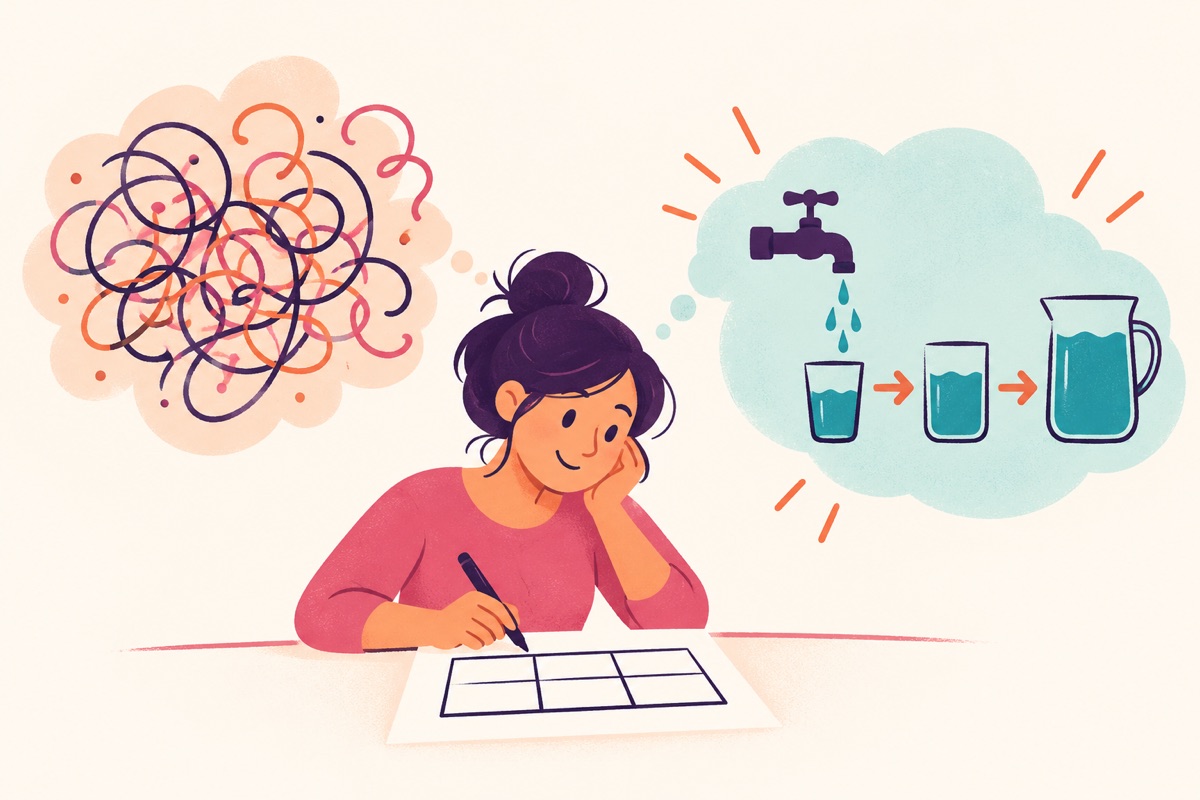
Geometry questions are built from facts that are easy to lose. A length tucked into the second sentence. An angle mentioned once. A word like "center" that quietly tells you two lines are the same length. If those facts live in the text and not on your drawing, you have to go hunting for them. Every hunt costs time.
Do the math on that. Each Quant section gives you 20 questions in 35 minutes. That's an average of 1 minute and 45 seconds per question. Say you spend just 10 extra seconds per question re-reading because your notes are thin. That's 200 seconds per section, or 3 minutes and 20 seconds. You get two Quant sections, so that's 6 minutes and 40 seconds spent reading words you already read. Would almost 7 extra minutes make Quant feel easier? I'll bet it would.
So when someone tells me they have a 'pacing problem' in geometry, I don't touch the clock. Slow pacing is a symptom. The cause is almost always the same: the facts never made it onto the paper. This is the exact same habit behind drawing the table on every rate problem. Put the information where you can SEE it, and the question starts to answer itself.
The 5 labeling mistakes I see most
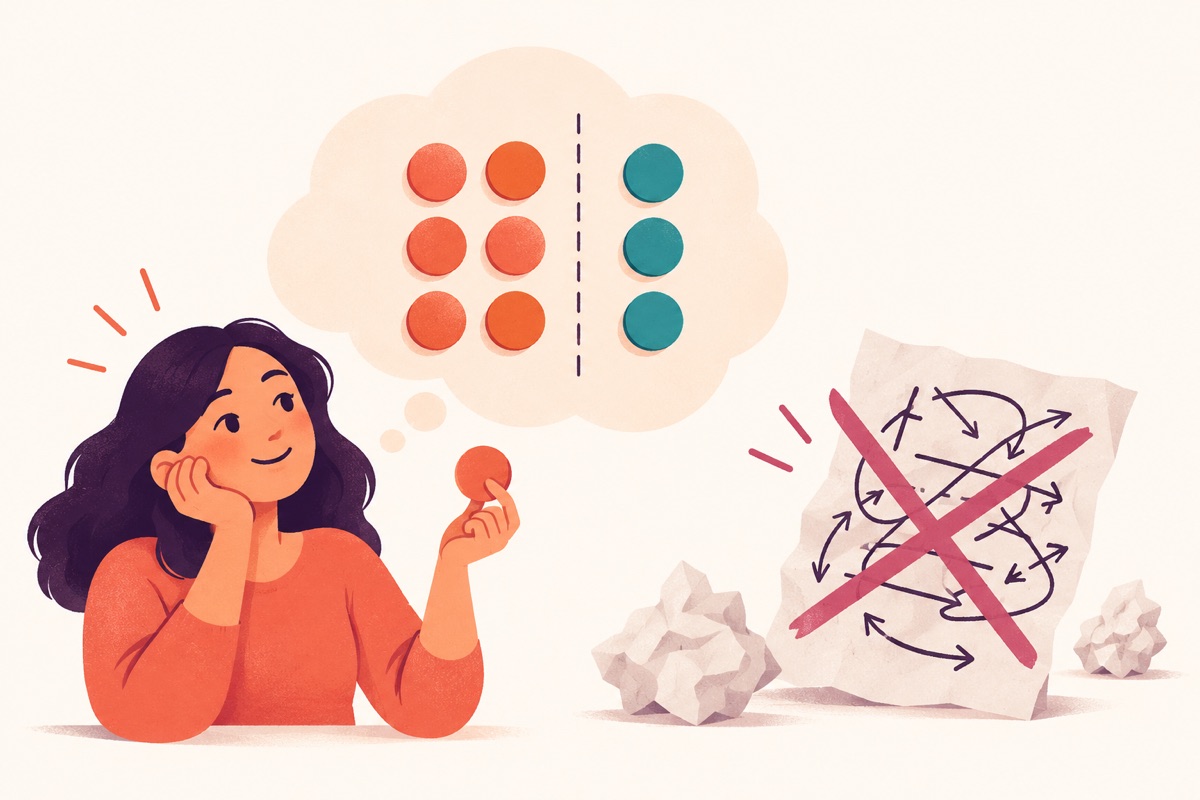
- Trusting the picture. The figure on screen looks like it has a right angle, so you treat it like one. A picture is a hint, not a fact. If the words don't SAY the angle is 90 degrees, you can't use 90 degrees. INSTEAD: Redraw the figure yourself and put on it only what the words tell you. If your drawing could be stretched or squished and still fit every fact, then the answer might stretch too.
- Leaving facts in the text. You read "the perimeter is 28" and think "got it." Then you need it 40 seconds later and you're scrolling back up. INSTEAD: As you finish each sentence, move that fact onto your drawing. Read once, label once.
- Missing the hidden facts. Some facts are never written as numbers. A radius is the distance from the center of a circle to its edge, so every radius in the same circle is the same length. The three angles inside any triangle add up to 180 degrees. If two sides of a triangle are equal, the angles across from them are equal too. INSTEAD: After you label what you're given, stop and ask "what ELSE must be true?" Then label that.
- Working in your head. You're smart. You can hold three numbers in your head. Can you hold five while also reading answer choices? That's where the little mistakes come from, and the little mistakes are the points you're actually losing. INSTEAD: Write every step, even the ones that feel too easy to write.
- Grabbing the calculator first. The on-screen calculator can multiply. It can't tell you WHICH numbers to multiply. INSTEAD: Label first, plan second, calculate last. Most of the time you won't need the calculator at all.
Now let's put the habit to work.
Notice that the math there was easy. Squaring, subtracting, dividing by 2. The hard part was SEEING that OA and OB were equal, and you only see it if you label it.
The next one is a Quantitative Comparison question. That's the GRE format where you compare two amounts and decide which is bigger. You get four choices every time, and the fourth one is a magnet for people who didn't label.
This is training, not knowing
Here's the part people don't want to hear. You probably already KNOW every rule I used above. Knowing isn't the problem. The problem is that under time pressure, you skip the routine and jump straight to the math.
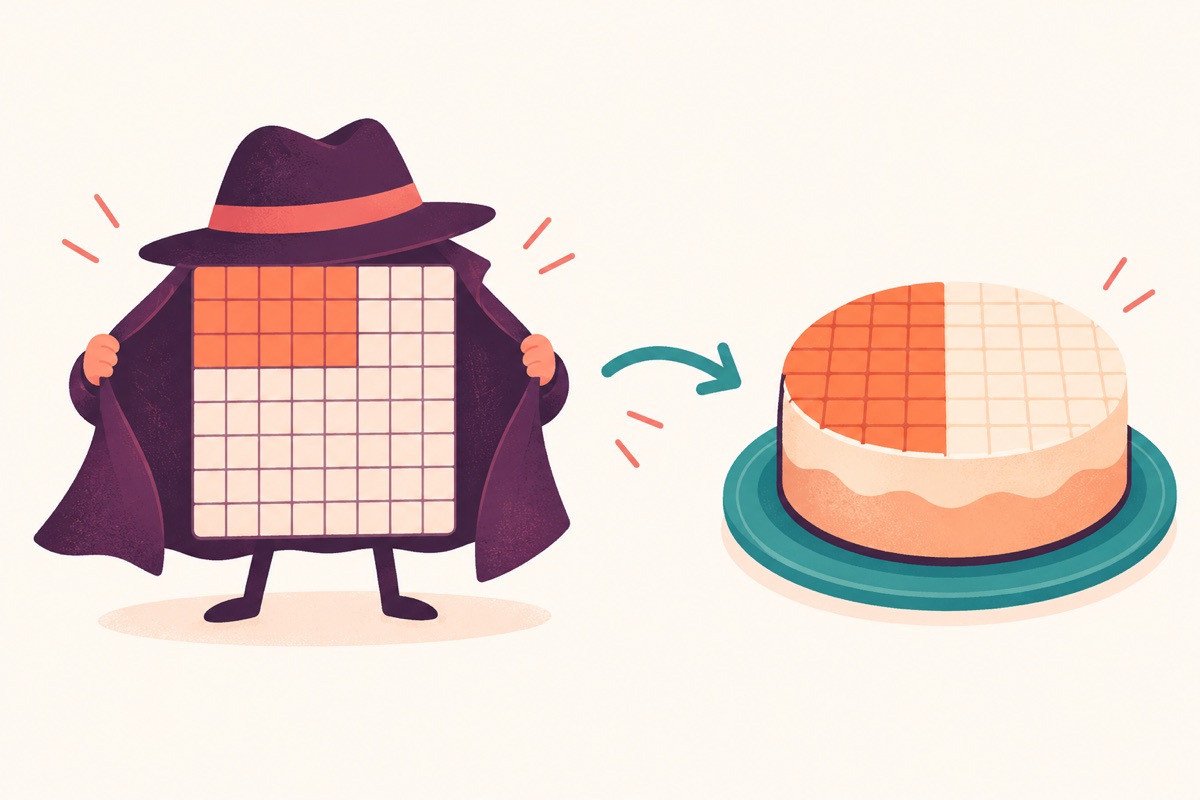
Watch a good free throw shooter. Same bounce, same breath, same release, every single shot. Not because they forget how to shoot, but because the routine is what holds up when the pressure hits. Labeling is your routine. Just like percents are just fractions in disguise, a geometry figure is just a list of facts in disguise. Your job is to unmask every one of them before you calculate a thing.
And yes, it feels slower at first. It isn't. Ten seconds of labeling beats 40 seconds of hunting and a wrong answer. You have to decide what you want MORE: a few seconds saved on the easy questions, or a higher Quant score.
Your challenge for today
Pull out 10 geometry questions you've already done, including the ones you got right. Redo every one of them with a fresh drawing. Before you write a single equation, label every given fact AND every hidden fact. Then count how many of your original wrong answers had a fact you never wrote down. I'll bet it's more than half.
Then take that habit into your next full practice test, like the free POWERPREP tests from ETS, and look at your paper afterward. If your geometry drawings are bare, you've found your 'pacing problem.' Now go fix it.