Percents Are Just Fractions in Disguise
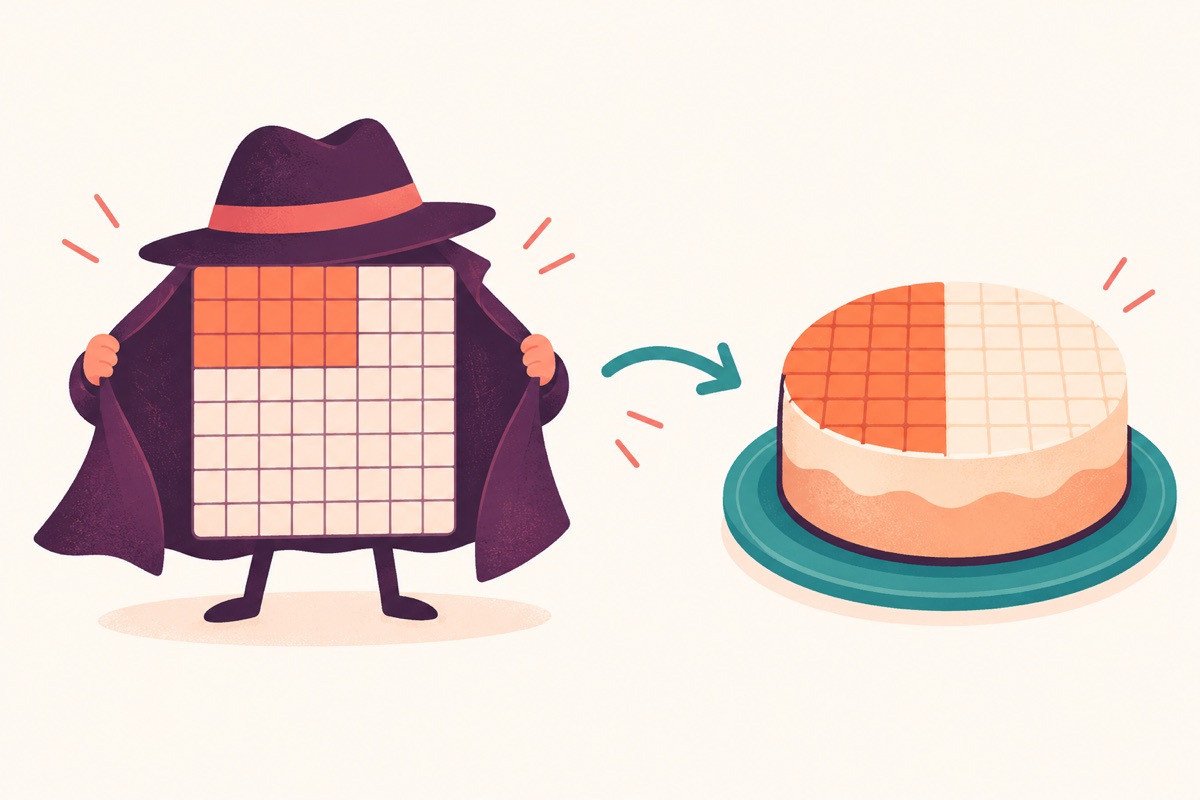
Here's a scene I watch every single week. A Test Taker hits a Quant question with the word "percent" in it, and their shoulders go up. They write x on the scratch paper, then 0.2x, then something like 1.2x times 0.8. They stare at it. They grab the calculator. They re-read the question. Two and a half minutes later they pick the answer that 'feels right.' It's wrong.
Here's my verdict. Percents are NOT a separate, scary topic. A percent is a fraction with 100 on the bottom, wearing a costume. Once you see that, and once you start picking 100 as your starting number, most GRE percent questions become some of the easiest points in the Quant section.
A percent is a fraction out of 100
The word gives it away. "Per cent" means "per hundred." 30% means 30 out of 100. 25% means 25/100, which is 1/4. So "25% of 80" just means 1/4 of 80, which is 20. No formula. No decimal gymnastics.
You should know these on sight, the way you know your own phone number:
| Percent | Fraction |
|---|---|
| 50% | 1/2 |
| 25% | 1/4 |
| 75% | 3/4 |
| 20% | 1/5 |
| 10% | 1/10 |
| 12.5% | 1/8 |
| 33 1/3% | 1/3 |
Yes, the GRE gives you an on-screen calculator. Use it when the numbers really are ugly. But if you need a calculator to find 25% of 80, you're taking the long way, and the long way is where the clock and the silly mistakes eat you alive.
No number given? Pick 100
A LOT of GRE percent questions never tell you the starting value. The price of the lamp. The size of the town. The number of students. They just say it went up 20% and then down 15%, and ask what happened.
Most people respond by inventing a variable. Stop. Ask yourself one question: if I could pick ANY starting number, which one makes percents easiest? There's only one good answer. 100. Every percent of 100 is just the number itself. 20% of 100 is 20. 7% of 100 is 7. You've gone from algebra to counting.
This is TESTing VALUES: you swap the unknown for a real, friendly number and just do the math. Here it is on a Quantitative Comparison question. That's the GRE format where you get two quantities, A and B, and decide which is bigger, whether they're equal, or whether you can't tell. You can see every question type on the official Quant section page.
Every percent has a base
Here's the part that separates the people who understand percents from the people who just calculate them. A percent is always a percent OF something. That something is the base, the bottom of the fraction. Change the base and the same percent means a different amount.
That's exactly why up 20% and down 20% don't cancel. The first 20% was 20% of 100. The second 20% was 20% of 120. Different base, different amount.
Percent change is just a fraction too: the change over the original. Go from 80 to 100 and the change is 20, the original is 80, so 20/80 = 1/4 = 25%. Go from 100 to 80 and the change is still 20, but the original is now 100, so it's 20%. Same two numbers. Different answers. The base decides.
One more, on a Numeric Entry question, where you type your own answer in a box and there are no choices to lean on. If that format makes you nervous, read Numeric Entry: No Answer Choices, No Excuses.
The 4 percent mistakes I see most
Adding and subtracting percents. "Up 25, down 20, so up 5." That only works when both percents sit on the same base, and on the GRE they almost never do.
INSTEAD: run every step on real numbers, starting from 100, and write each new value down.
Using the wrong base. "Percent less than" and "percent greater than" flip the base, and the test LOVES to put both answers in the choices.
INSTEAD: before any math, write "of what?" and circle the number that follows "than" or "of."
Writing variables when no number is given. Algebra works. It's also slower and easier to botch.
INSTEAD: the moment you see no starting value, write "100" on your scratch paper. Then go.
Doing the steps in your head. You're 'sure' you can hold 100, then 120, then 96 in memory. Under the clock, with a second section still ahead of you, you can't. Not reliably.
INSTEAD: one line per step on paper. It takes five seconds and it saves you from the re-read.
Stop for a second and think about which of those four is YOURS. Don't read on until you have one.
Here's your challenge for today. Pull 10 percent questions you've already done. Redo every one of them from scratch, picking 100 whenever no number is given and circling the base every time, all on paper. Time each one. Then compare those times to your first try. I'll bet more than half of them got faster, and I'll bet at least one you 'got right' the first time was a lucky guess you can now actually explain.